Investigation: How Kwara govt abandoned multibillion-naira projects after commissioning
The expansive production halls inside the Kwara Garment Factory are now largely silent. Industrial sewing machines that once operated in coordinated rhythm under the supervision of expatriate trainers have stopped humming. Workstations arranged to accommodate hundreds of young operators sit idle.
Around the facility, the atmosphere no longer reflects the optimism and political celebration that accompanied its commissioning in August 2024 as one of the Kwara State Government’s flagship industrial projects.
Barely fourteen months after Governor AbdulRahman AbdulRazaq unveiled the factory as a strategic intervention to transform Kwara into a manufacturing destination, the project has slipped into operational paralysis amid labour unrest, management instability, and mounting regulatory pressure stemming from the controversial conversion of an airport cargo facility into a garment production hub.
What began as an ambitious industrialisation programme designed to create employment opportunities for hundreds of young people has gradually evolved into a complex controversy involving allegations of poor labour welfare, prolonged uncertainty surrounding workers’ employment status, inconsistencies in public expenditure, outsourcing disputes, and concerns raised within aviation circles over the suitability of situating large-scale industrial activity within an airport operational environment.
Findings by The Informant247 revealed that the shutdown of the factory did not emerge from a single isolated event, but from a convergence of operational, regulatory, and administrative pressures that steadily accumulated behind the scenes while the public narrative around the project remained largely celebratory.
How an airport cargo terminal became a Garment Factory
At the centre of the controversy surrounding the garment factory lies the facility’s unusual origin.
Unlike traditional industrial projects typically developed within designated manufacturing zones or industrial estates, the Kwara Garment Factory was established inside a cargo terminal complex on the premises of the General Tunde Idiagbon International Airport.
Investigations by The Informant247 showed that the structure was originally designed as part of the airport’s cargo infrastructure, was later allocated to the state government, and was subsequently repurposed as a garment manufacturing facility during the COVID-19 pandemic.
The timing of the conversion was significant. In 2020, the COVID-19 outbreak disrupted economic and aviation activities globally, forcing governments at all levels to pursue economic recovery strategies to address rising unemployment and declining revenues. Aviation activities across several airports in Nigeria slowed considerably during the period, while many government institutions began reconsidering the utilisation of existing infrastructure.
Within that context, the Kwara State Government initiated plans for what it described as a large-scale industrial and empowerment initiative focused on garment production. Rather than constructing an entirely new industrial complex, the administration turned to the airport’s cargo terminal.
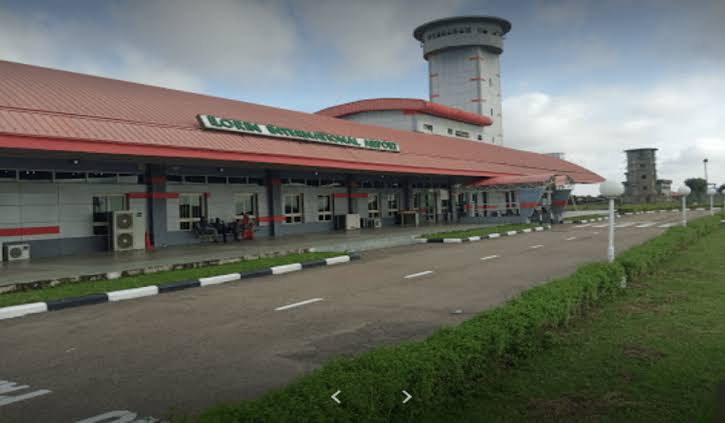
The structure was thereafter redesigned and fitted with industrial production equipment while recruitment and technical training programmes commenced for prospective workers.
However, FOI request sent to FAAN were not responded to.
The commissioning and the promise of the Industrial Revolution
Despite concerns about the facility’s location, the state government proceeded with the project and elevated it to one of its most visible industrial initiatives.
When the factory was commissioned in August 2024, government officials projected it as a major economic breakthrough capable of repositioning the state within Nigeria’s garment and textile value chain.
The commissioning ceremony reflected the administration’s broader economic messaging around industrialisation, youth empowerment, and local production. Public officials repeatedly described the project as evidence of a deliberate transition from civil-service-driven economic dependence toward manufacturing and enterprise development.
Hundreds of trainees were recruited into the programme and underwent technical training coordinated by Indian expatriates brought in to supervise production and skills transfer.
Within the factory premises, industrial sewing machines, cutting sections, and production lines were arranged to simulate a full-scale manufacturing ecosystem capable of handling mass garment production.
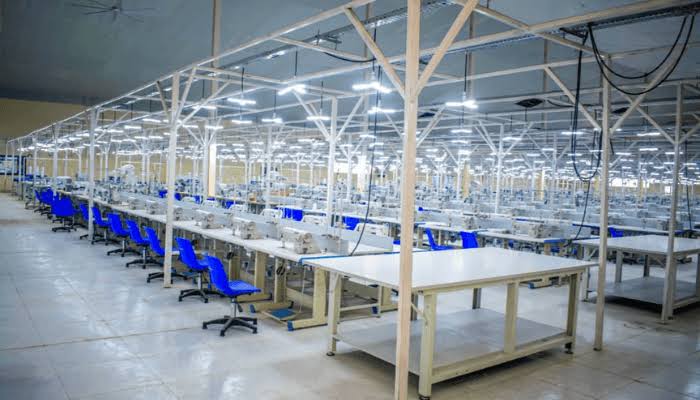
Government officials also presented the project as an employment-generation platform expected to provide direct and indirect economic opportunities for residents of the state.
Behind the public celebration, however, workers say operational realities inside the factory soon began to differ sharply from the expectations that accompanied the project’s unveiling.
“We were handled like secondary school students”, workers recount conditions inside the factory
By October 2025, tensions that had quietly built within the facility erupted into public protest as workers accused the management of poor welfare conditions, exploitative work policies, and prolonged salary-related grievances.
One Monday morning, aggrieved workers gathered in large numbers around the factory premises, disrupting operations and demanding payment of outstanding wages and improvements in working conditions.
The protest attracted the intervention of security operatives as tension rose around the facility. Several workers who spoke to The Informant247 described an atmosphere of fear, uncertainty, and administrative pressure inside the factory.
One worker, who requested anonymity, said employees were subject to repeated warnings that their jobs could be terminated during probation if they failed to comply with management directives.
“From our first day at work, things changed drastically. The way we were handled was nothing different from how secondary school students are treated,” the worker said.
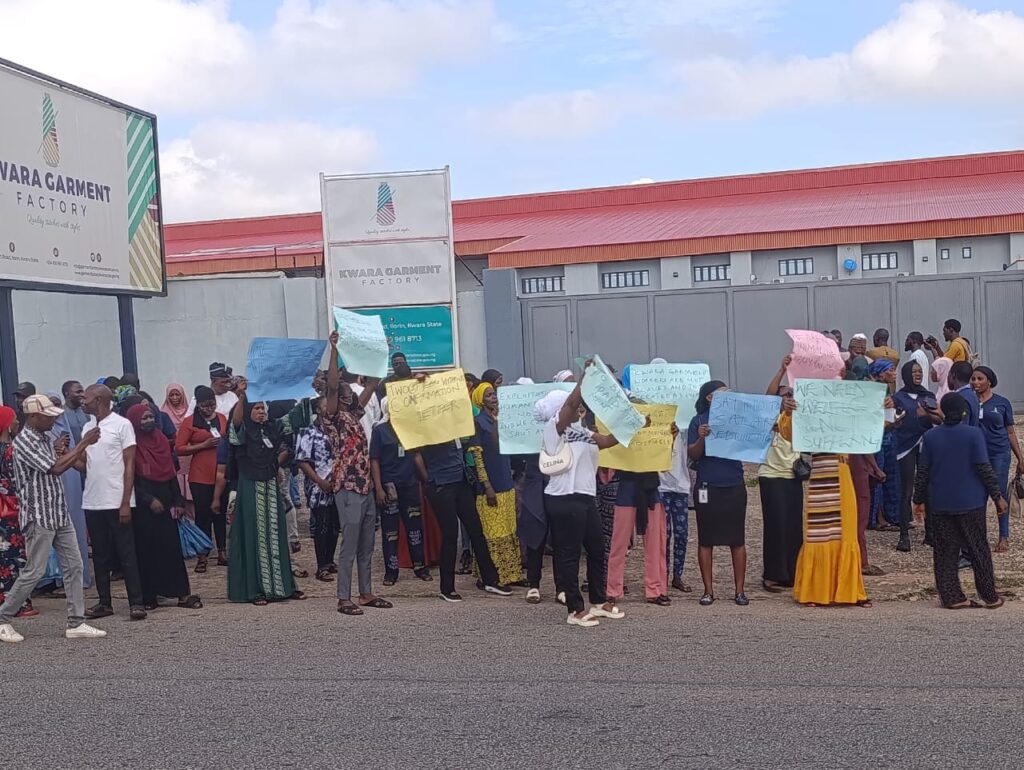
According to the source, workers initially engaged in intensive production under expatriate supervision without receiving full payment for the first few months of operation.
“We were trained by Indian professionals and produced thousands of garments during the first few months, but we were not paid for the initial three months,” the worker disclosed.
The source explained that management later introduced probationary appointment arrangements with monthly salaries of ₦50,000, but workers alleged that deductions continued despite existing salary arrears.
“Even after they offered probation letters, deductions continued. Some months, they deducted ₦2,000 from salaries that were already too small,” the source said.
Other workers disclosed that despite completing probation periods, their appointments were neither regularised nor significantly improved.
“Six months passed, and there was no confirmation, no increment, and no proper explanation,” another worker stated.
Employees further alleged that salary deductions were routinely applied whenever workers missed work, including situations linked to illness.
“If any operator missed one day, deductions followed immediately. There was no proper welfare structure, and many people became afraid of taking time off even when sick,” a source explained.
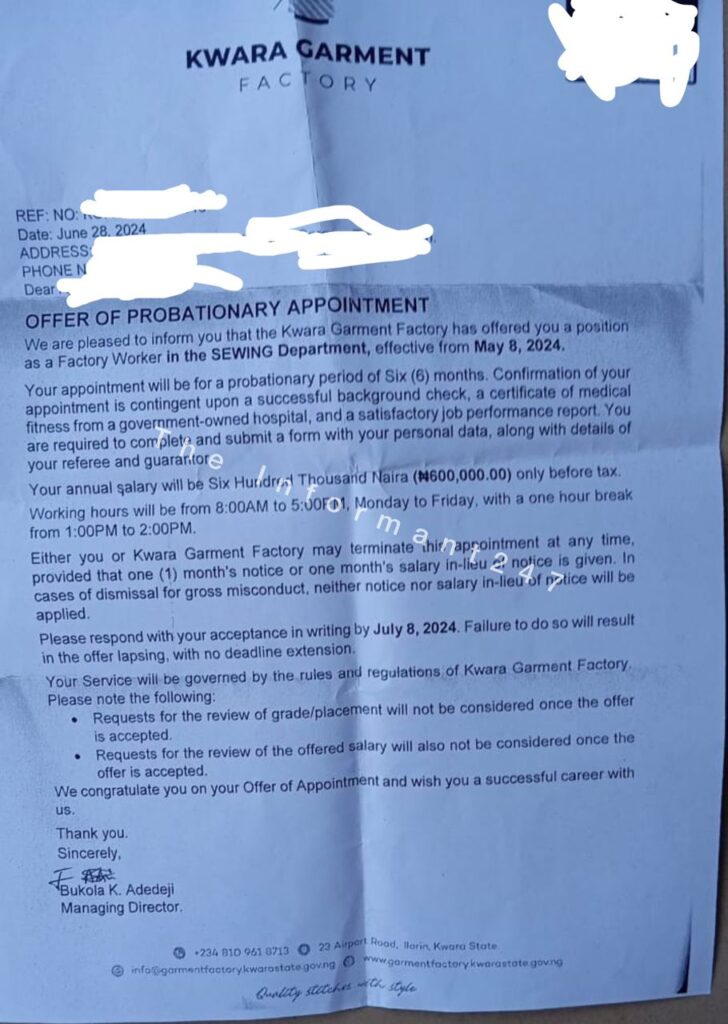
One worker recounted the death of a colleague whose health reportedly deteriorated while attempting to continue working under difficult conditions.
“One of our colleagues died during the period of all these repeated promises. He was seriously ill but continued coming because everybody feared deductions,” the worker alleged.
“Machine operators handling the major production work earned about ₦48,000 while some supervisors earned almost double despite doing less technical work,” the worker said.
The protest marked the first major public rupture within the factory and exposed deeper organisational tensions that had gradually accumulated beneath the project’s public image.
The shutdown and outsourcing process
Shortly after the workers’ protest, the Kwara State Government announced what it described as a temporary shutdown of the factory.
In a statement issued by the Commissioner for Business, Damilola Yusuf Adelodun, the government explained that the closure was linked to an ongoing transition process following the selection of a preferred bidder to take over the factory’s operations.
“Sequel to the advertisement on the expression of interest published in national newspapers in compliance with public procurement regulations for the outsourcing of the management of the garment factory, we are glad to announce that a preferred winner has emerged,” the statement read.
“The garment factory will therefore be temporarily shut down to undertake pre-handover maintenance and inventory checks.”
The statement further directed civil servants attached to the factory to return to their parent ministries, while trainees were advised to apply to the successful bidder for possible engagement.
Government officials also announced that trainees would receive a one-month training allowance during the transition period.
At the time, the closure was publicly framed as an administrative restructuring process designed to reposition the factory for improved operational management.
However, findings from The Informant247 revealed that the “temporary shutdown” gradually evolved into prolonged inactivity, with no significant production resuming for several months after the announcement.
During visits to the facility, there were no visible signs of full industrial operations despite continued public expenditure on the project.
The government released another billion for the facility
Financial records reviewed by The Informant247 showed that despite the prolonged shutdown of the garment factory, public funds have continued flowing into the project.
Findings indicated that approximately ₦1.1 billion was spent on the facility in 2024.
In 2025, another ₦280 million was expended on the project despite the operational shutdown that followed the workers’ protest and transition announcement.

Budgetary records further revealed that an additional ₦1 billion has now been earmarked for the facility in the 2026 budget cycle.
The continued allocations have intensified scrutiny surrounding the project’s long-term sustainability and expenditure structure, particularly given the absence of visible production activities months after the shutdown.
The spending pattern has also drawn broader attention to concerns surrounding the execution and continuity of several high-profile infrastructure and development projects within the state.
Not only the Garment Factory, but the Ilorin Visual Arts Centre suffers a similar fate
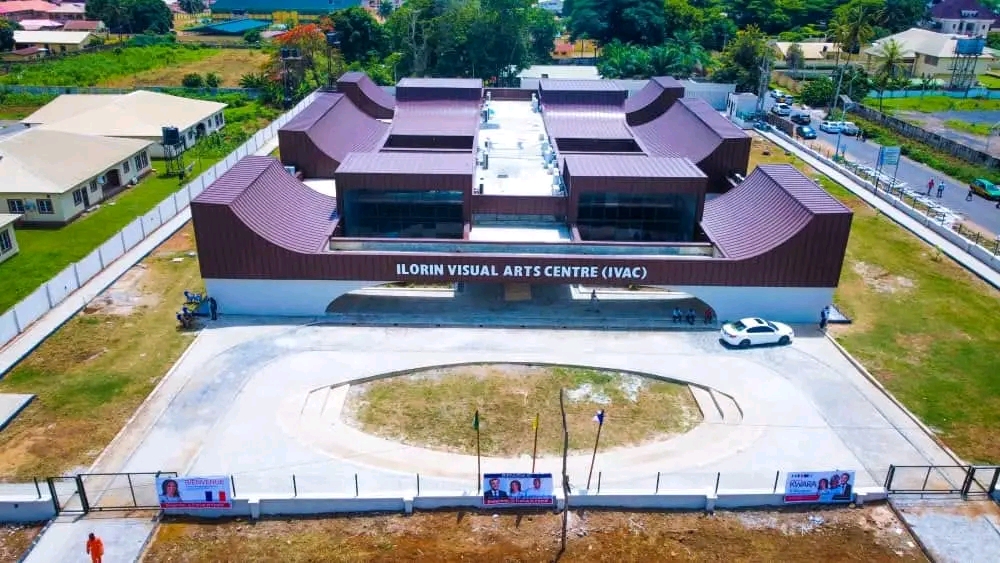
The situation surrounding the garment factory mirrors concerns already raised about another major Kwara government project: the Ilorin Visual Arts Center, located opposite the Kwara State Government House along Ahmadu Bello Way in Ilorin.
The Visual Arts Centre was conceived as a state-of-the-art cultural and creative hub expected to attract artists, tourists, investors, and creative enterprises to the state.
On August 8, 2020, the Kwara State Executive Council approved the construction of the facility, with a contract sum of ₦755,496,768.12, awarded to Habtob Global Construction Ventures.
Government officials at the time projected the centre as a transformative cultural infrastructure capable of stimulating tourism, employment, and economic activities linked to the creative industry.
The facility was expected to include studio workshops, exhibition centres, art galleries, post-production facilities, restaurants, and cafés.
In June 2021, Governor AbdulRazaq formally unveiled the project alongside Jerome Pasquier during the ambassador’s visit to the state.
The French envoy reportedly described the project’s architectural concept as “breathtaking”.
However, several years after the unveiling, the facility remains largely inactive.
A visit by The Informant247 found the building under lock and key, with no significant activity inside the complex. A police officer stationed around the facility confirmed that operations had not commenced.
Further observations showed that several operational fittings and pieces of equipment had yet to be installed within the center.
Over ₦1.8bn spent on ₦755m approved project
An independent review of financial records by The Informant247 uncovered substantial increases in government spending on the Visual Arts Centre beyond the original contract sum approved in 2020.
Although the project was initially awarded at ₦755,496,768.12, records showed that total expenditure on the facility rose to approximately ₦1.85 billion between 2020 and September 2024.
Findings showed that ₦268.6 million was spent on the project in 2020, while expenditure increased to ₦805.7 million in 2021.
In 2022, another ₦216.2 million was reportedly expended, followed by ₦335.9 million in 2023 and an additional ₦225.7 million by September 2024.
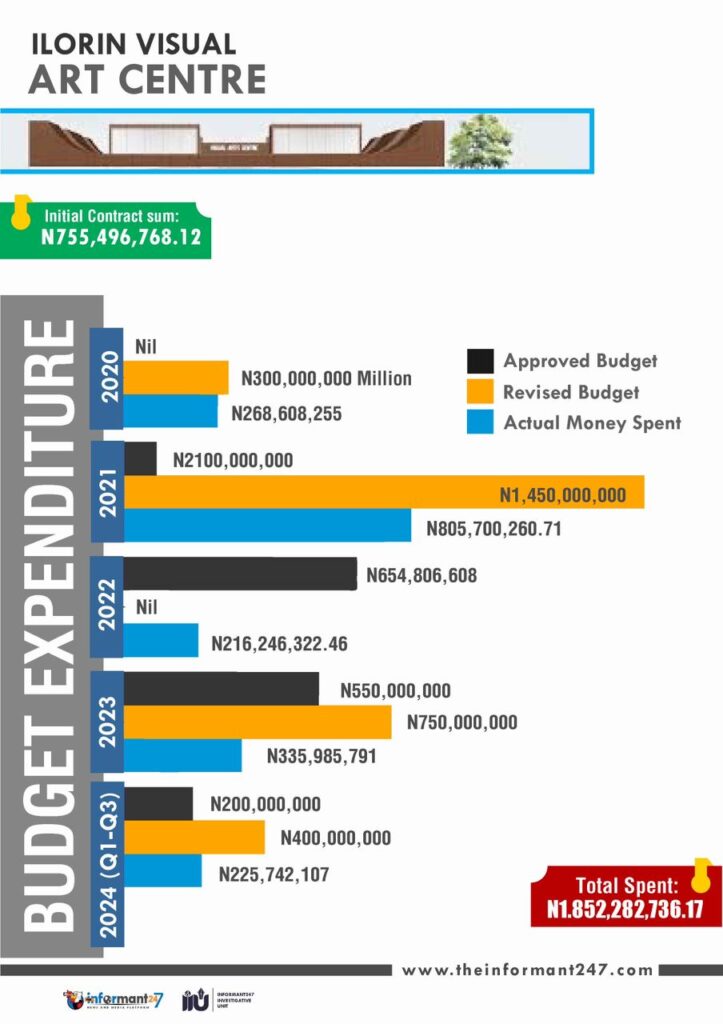
The financial records showed that the total expenditure exceeded the original contract value by more than ₦1 billion.
Government’s explanation and emerging discrepancies
In response to inquiries about expenditure on the Visual Arts Center at the time, the Commissioner for Communications, Bolanle Olukoju, stated that the project underwent cost revisions due to inflation, exchange rate fluctuations, and rising construction costs associated with post-pandemic economic realities.
According to her, the project’s contract value was increased from ₦755 million to approximately ₦1.36 billion following global economic disruptions that affected material costs.
“The contract was awarded in 2020, before the COVID-19 pandemic, which disrupted not only our way of life but also severely impacted the global economy,” she said.
However, findings by The Informant247 showed that the project approval occurred months after the COVID-19 outbreak and nationwide lockdown measures had already begun in Nigeria.
Financial documents reviewed during this investigation also revealed discrepancies between the expenditure figures contained in official government records and figures provided in official responses to inquiries.
The inconsistencies further deepened concerns surrounding transparency and accountability in the implementation of major public projects within the state.
Civil society raises concerns
Civil society organisations monitoring governance and public spending in Kwara State expressed concern about the operational status and expenditure profiles of both projects.
Lanrey Osho of the Elite Network for Sustainable Development described the Visual Arts Centre as a “white elephant project” whose impact remains largely unclear despite years of expenditure.
“One of the problems we have is how governments embark on large projects without completing them within projected timelines,” he said.
He further stressed the need for public projects to reflect immediate social and economic priorities that can directly impact residents facing economic hardship.
This investigation was published with support from Civic Media Lab.