OP-Ed: KwaraNdupe rally and the politics of momentum ahead of 2027
By: Hassan Babatunde
Political rallies are often dismissed as spectacles that bear little relationship to election outcomes. History has shown that large crowds do not necessarily translate into votes, just as modest gatherings do not always signal electoral weakness. Yet there are moments when a political event becomes significant not because of attendance figures but because of the message it sends about the direction of a political movement. The recent KwaraNdupe Rally in Ilorin deserves to be viewed through that lens.
Coming just days after the All-Progressives Congress (APC) concluded its governorship primary in Kwara State, the rally became one of the earliest indicators of how the party intends to approach the 2027 general elections. More importantly, it offered a snapshot of party cohesion and grassroots mobilisation at a time when post-primary disagreements threatened to dominate public discourse.
The emergence of Engr. Salihu Yakubu Danladi as the APC governorship candidate was always expected to generate dissent. Across Nigeria, party primaries routinely produce grievances and competing interests. Kwara was no exception. Following the primary, attention shifted to the G10, whose public statements questioned the process, creating the impression that the APC was drifting towards a prolonged internal crisis.
Then came the KwaraNdupe Rally.
More than a routine political gathering, it became a powerful demonstration of organisational strength. Thousands of supporters from the state’s three senatorial districts converged in Ilorin to express appreciation to President Bola Ahmed Tinubu, Governor AbdulRahman AbdulRazaq and the APC leadership following the emergence of the party’s candidates. At a time when public attention had become dominated by internal disagreements, the scale, coordination and enthusiasm of the rally shifted the conversation from division to political momentum.
That shift matters because politics is fought not only at the ballot box but also in the arena of public perception. The rally projected a party moving beyond its primary contest and focusing on the larger electoral task ahead. It also demonstrated that the APC’s grassroots structures remain active, coordinated and capable of rapid mobilisation across Kwara State.
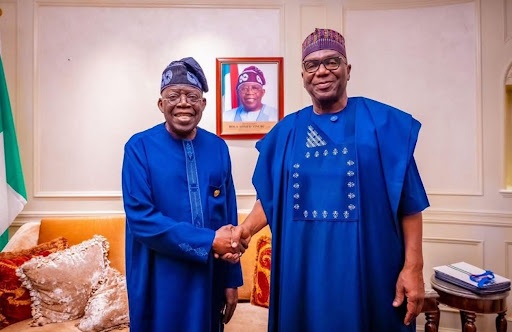
Equally significant is what the rally says about Governor AbdulRahman AbdulRazaq’s leadership of the APC. Since assuming office in 2019, the governor has steadily consolidated the party’s structures across the state. The successful conduct of the primary, followed immediately by one of the largest post-primary mobilisations in recent Kwara history, suggests that despite objections from a minority, the mainstream APC remains firmly united behind its leadership and candidates.
Naturally, disagreement is part of democratic politics. Every major political party contains competing interests. The real question is whether dissent translates into genuine political momentum or remains confined to statements and elite disagreements.
The contrast became even clearer with the actions of the G10. In a June 20 petition to President Bola Ahmed Tinubu, members of the group warned that unless the current situation changed, the APC’s electoral prospects in Kwara would be “severely imperilled” and suggested that some stakeholders might seek alternative political platforms ahead of 2027. Such language is hardly the conduct expected of loyal party faithful. At a time when the party should have been consolidating after its primary, the threat of abandoning the APC projected disunity rather than a commitment to resolving internal differences.
Within days, however, the KwaraNdupe Rally presented an entirely different picture. Instead of a party on the verge of collapse, Nigerians witnessed a confident and well-organised political movement capable of mobilising thousands of supporters across Kwara’s three senatorial districts. The rally effectively countered the narrative that the party was losing direction.
The subsequent postponement of the G10 rally only reinforced the contrast. Regardless of the differing explanations offered, politics ultimately rewards visible organisation. Those seeking to challenge an established leadership must demonstrate comparable grassroots reach and political relevance. So far, the KwaraNdupe Rally has provided tangible evidence of organisational strength, while its critics have struggled to produce a similar public display of support.
Nevertheless, the significance of the KwaraNdupe Rally should not be underestimated. It reshaped the political conversation in Kwara from one centred on post-primary disagreements to one focused on party unity, leadership and electoral preparedness. Rather than a party consumed by internal crisis, the APC projected the image of a cohesive political organisation with an extensive grassroots network and a clear determination to consolidate ahead of the next general election.
Politics is rarely static, and today’s momentum does not guarantee tomorrow’s success. Yet moments of public mobilisation often provide valuable snapshots of where political energy resides. The KwaraNdupe Rally was one such moment. More than an appreciation march, it became an unmistakable statement that the mainstream APC in Kwara remains organised, confident and focused on the road to 2027. In politics, relevance is ultimately measured not by petitions or press statements but by the ability to inspire, organise and mobilise people. On that score, the KwaraNdupe Rally has, for now, set the pace.
• Hassan Babatunde, a political analyst writes from Ilorin.