Keke Napep in Ilorin: A transport lifeline losing control
By Abdullahi Tunde Aborode and Abdulkareem Olakilekun Abdullateef
Anyone who moves around Ilorin regularly knows that the conversation about keke napep has become unavoidable. These tricycles have helped many families survive. They have created jobs, improved mobility in areas where taxis are scarce, and made short-distance transport affordable. No one can deny their economic value. But something has gone wrong in how they operate, especially in the central parts of the city, and it is beginning to feel like order has quietly slipped away.
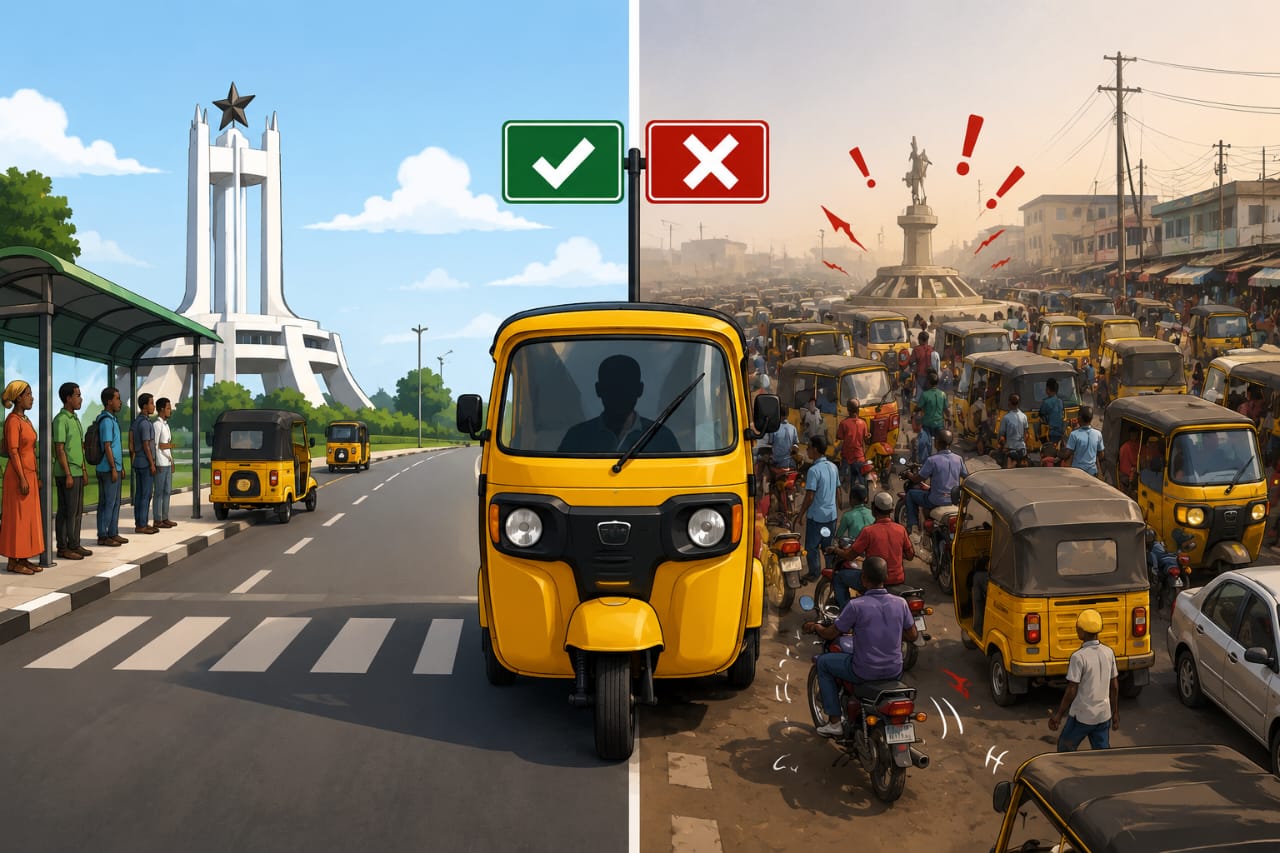
Take the roundabout at Geri Alimi. What should be a smooth flow of traffic has turned into a daily struggle. Keke riders cluster right at the turning points, stopping abruptly to pick passengers, blocking visibility, and forcing other drivers into risky maneuvers. It is no longer just inconvenient; it is dangerous. You see cars swerving, motorcycles squeezing through tight gaps, and pedestrians trying to guess when it is safe to cross. All of this happens in seconds, and all it takes is one mistake for things to go terribly wrong.
Then there is Mandate Market, one of the busiest commercial hubs in the city. The situation there is even more chaotic. Keke riders compete aggressively for passengers, parking in disorganized clusters, ignoring any sense of lane discipline. They stop in the middle of the road, reverse without warning, and sometimes drive against traffic just to secure a quick fare. The result is constant gridlock. Traders, buyers, and other road users are left to navigate a system that seems to have no rules.
Around Al-Hikmah University, the story is not different. The reckless driving in that area is particularly concerning because of the number of students and pedestrians. Keke riders speed through narrow roads, overtake dangerously, and create unnecessary traffic buildup, especially during peak hours. What should be a calm academic environment is often disrupted by noise, confusion, and avoidable congestion.
The deeper issue here is not just the behavior of individual riders, but the absence of consistent enforcement and structure. When people begin to drive as if there are no consequences, it sends a message that the roads are open to anything. That is how a city gradually starts to feel lawless, not because laws do not exist, but because they are not visible in action.
It is important to be balanced in this conversation. Keke napep has undeniably improved the local economy. Many riders depend on it for their livelihood, and many residents depend on it for daily movement. But economic benefit should not come at the cost of public safety and order. A system that helps people earn a living should not simultaneously put lives at risk.
What Ilorin needs now is not a ban, but proper moderation. Designated loading points should be clearly defined and enforced. Riders should not be allowed to operate freely at roundabouts and critical junctions. Traffic officers need to be present, not occasionally, but consistently, especially in known hotspots. There should also be stricter penalties for reckless driving, so that compliance is not optional. Beyond enforcement, there is also a need for orientation and training. Many riders simply operate based on instinct and urgency, not on road safety principles.
This is one of those moments where government attention is urgently needed. If nothing is done, the situation will only worsen as more tricycles enter the system. Ilorin is growing, and its transport system must grow with structure, not chaos.
At the end of the day, this is about protecting lives and restoring dignity to how the city moves. The roads belong to everyone, not just those in the rush to pick the next passenger.