
COLUMN: Kogi’s 17-10-0 political arithmetic and the case for Kogi West
By ADEYEMI, Daniel B.
The debate over who should govern Kogi State in 2028 is increasingly being framed around one question: can a political arrangement that has seen Kogi East and Kogi Central occupy the governorship while Kogi West has never produced a governor continue to be regarded as equitable?
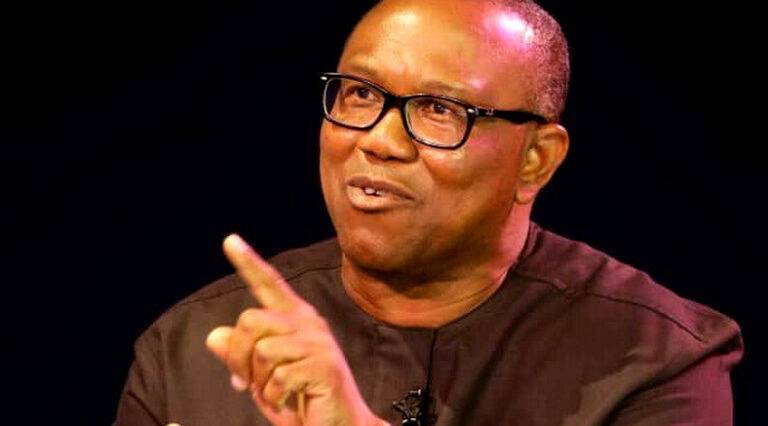
Former Kogi State Commissioner for Information, Dr Tom Ohikere, has brought this question back to the centre of political discourse with his call for the governorship to rotate to Kogi West in 2028. Ohikere, who is also the convener of the Coalition for Better Kogi State, argues that the distribution of political power among the three senatorial districts has left Kogi West at a disadvantage.
His argument is built around a simple political arithmetic. According to Ohikere, Kogi East has produced governors for 17 years, while Kogi Central has governed for 10 years, leaving Kogi West without a year in the governorship since the creation of the state. He has described the situation as “17-12-0”, taking into account the projected 12 years of Kogi Central control by January 2028.
The figures have become the basis of an argument that goes beyond the ambition of an individual politician or political group. They raise a broader question about how political inclusion should work in a state with three senatorial districts and a long history of competition over access to power.
Democracy does not necessarily guarantee that every geographical or political bloc will occupy an elected office in a predetermined sequence. Competence, political participation, experience, track record, popularity and the ability to win an election are legitimate considerations in choosing political leaders. A candidate does not become qualified simply because of where he or she comes from.
Yet, political arrangements in Nigeria have also frequently relied on zoning and rotation as mechanisms for managing competition and giving different sections of a society a sense of participation. In such circumstances, the question of who has previously occupied power cannot simply be dismissed.
This is where the Kogi West argument becomes significant. The district has participated in the state’s political process since its creation and is home to Lokoja, the state capital. Yet, according to the historical record cited by Ohikere, it has not produced an executive governor since Kogi State was created in 1991.
Ohikere himself comes from Kogi Central, which makes his intervention particularly notable. He has argued that his support for Kogi West is not based on ethnic or sectional interest but on what he considers a question of fairness.
“As an Ebira man from Okene, I cannot defend 17-12-0. My conscience forbids it,” he said in his recent call for power rotation to Kogi West.
The statement captures the central issue in the debate. If political rotation is accepted as a mechanism for balancing competing interests, then it becomes reasonable to ask whether a region that has never occupied the highest elected office should continue to wait while others take successive turns.
But there is another side to the argument. Power rotation is not a constitutional requirement, and the fact that a particular senatorial district has not produced a governor does not automatically mean that every election must be structured around geographical entitlement. Political parties and voters ultimately have the constitutional right to determine their candidates and elect their preferred leaders.
That distinction is important. The argument for Kogi West should therefore not be presented as a demand that the people of the district are automatically entitled to the governorship, regardless of the candidates put forward. Rather, it is an argument about whether political parties should consider the history of power distribution when deciding how to manage the 2028 contest.
The debate also shows why political inclusion cannot be reduced to the distribution of appointments. A region can have commissioners, legislators, local government chairmen and other political office holders and still feel excluded if it has never occupied the state’s highest elected office.
This is particularly important in a state such as Kogi, where political identity is closely connected to the three senatorial districts. The perception that one district has consistently controlled the governorship while another has never produced a governor can shape political relationships long after individual elections have ended.
At the same time, the conversation should not become a contest in which every political grievance is automatically settled by zoning. There must be room for voters to assess candidates on competence, integrity, experience, policies and their ability to address the state’s challenges.
The real challenge, therefore, is finding a balance between equity and electoral choice. Zoning can provide a framework for inclusion, but it cannot by itself guarantee good governance. Likewise, an emphasis on competence should not become a convenient argument for permanently excluding a section of the state from the highest political office.
The current debate around Kogi West offers an opportunity for the state to have that conversation openly. Rather than allowing the issue to become another source of political division, stakeholders can examine the history of power distribution, the arguments for and against rotation, and the implications of the different options for the state’s political stability.
Ohikere has called for a Kogi Equity, Unity and Rotation National Summit in October, after rejecting a separate summit on power rotation organised in the state. He said his proposed gathering would bring together stakeholders from Kogi East and Kogi West, as well as individuals from Kogi Central who support the principle of equity.
Whatever position stakeholders eventually take, the 2028 debate presents Kogi with a question that cannot be answered merely through political calculations: what does equitable participation mean in a state where one of its three senatorial districts has never produced an executive governor?
That question deserves a debate based not only on who wants power, but also on how the state can build a political arrangement in which its different sections believe they have a meaningful stake in its leadership.