Atiku to Tinubu: Economic hardship can’t be explained away with rhetoric
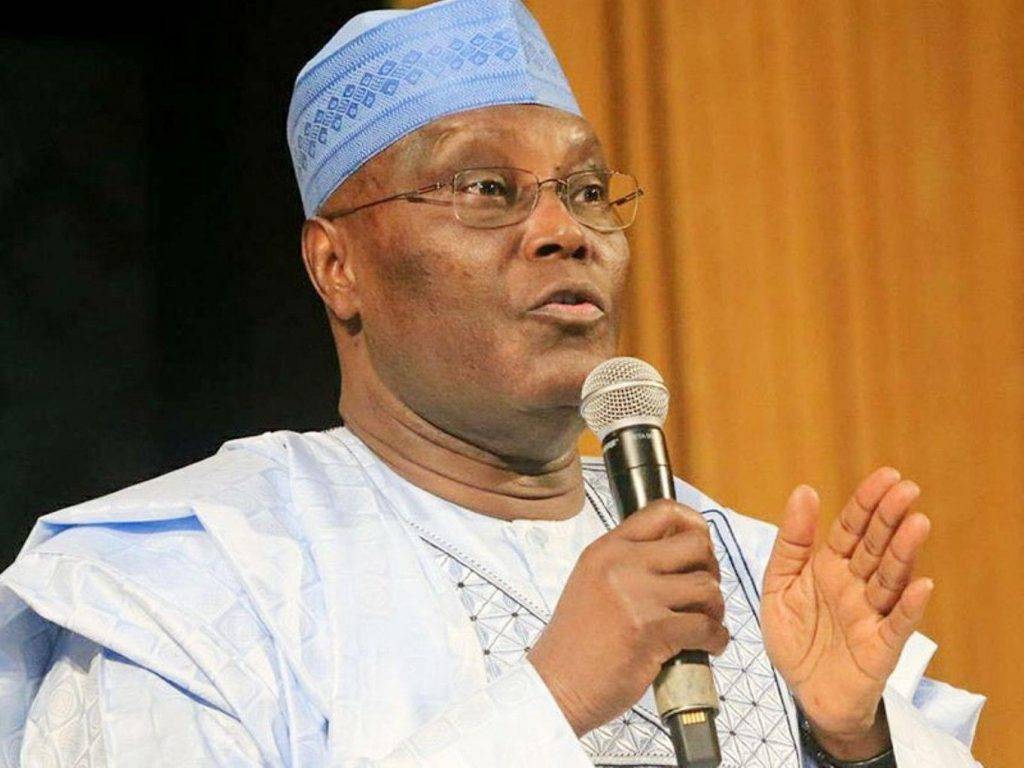
The presidential candidate of the African Democratic Congress, Atiku Abubakar, has criticised the administration of President Bola Tinubu over its defence of ongoing economic reforms, saying government rhetoric cannot erase the economic hardship Nigerians face.
In a statement issued on Sunday by his Senior Special Assistant on Public Communication, Phrank Shaibu, Atiku accused the Federal Government of relying on statistics to paint a misleading picture of the economy while Nigerians continue to struggle with inflation, unemployment, rising debt and worsening living conditions.
The former vice president was reacting to comments by the Minister of Finance and Coordinating Minister of the Economy, Taiwo Oyedele, who defended the administration’s reforms. Oyedele had argued that savings from the removal of fuel subsidy were being used to settle inherited liabilities, improve workers’ welfare and finance critical interventions.
Atiku, however, described the claims as misleading, insisting that the government had not reduced its indebtedness to the Central Bank of Nigeria.
He said the Federal Government’s exposure to the apex bank had risen from about ₦26.9 trillion when Tinubu assumed office in May 2023 to more than ₦40.38 trillion.
According to him, the government merely converted Ways and Means advances into treasury bills and bonds while accumulating fresh obligations.
“That is debt restructuring, not debt repayment,” he said.
The former vice president also cited recent remarks by the Governor of the Central Bank of Nigeria, Olayemi Cardoso, who disclosed that the CBN’s credit to the Federal Government increased from ₦22.99 trillion in May 2025 to ₦40.38 trillion in May 2026, representing a 77.6 per cent increase within one year.
Atiku said the figures contradicted the government’s claim that subsidy savings were being used to reduce public debt.
He also dismissed the administration’s assertion that subsidy savings had improved workers’ welfare.
According to him, the Federal Government has yet to fully implement the new minimum wage, while the 40 per cent peculiar allowance linked to the wage adjustment, scheduled to take effect from May 1, 2026, remains unpaid.
He added that the promised wage award had also not been fully implemented, describing the issues as concerns already raised by organised labour.
On education funding, Atiku questioned the government’s claim that subsidy savings were financing the Nigerian Education Loan Fund.
He noted that the Chief Executive Officer of NELFUND had publicly stated that the scheme received a ₦50 billion injection from funds recovered by the Economic and Financial Crimes Commission.
“If that is the case, why is the government now presenting subsidy savings as the source?” he asked.
The ADC candidate further criticised the administration’s explanation for rising debt servicing costs, saying the government could not blame high interest rates without acknowledging its own policies.
He argued that the sharp increase in the Monetary Policy Rate had made borrowing more expensive for manufacturers and businesses, while the government’s continued borrowing had crowded out the private sector and increased debt servicing costs.
Atiku maintained that the administration’s performance should be judged by the living conditions of Nigerians rather than official presentations.
He said food prices remained beyond the reach of many households, inflation continued to erode incomes, businesses were shutting down, unemployment remained high, the naira had depreciated significantly and poverty had worsened.
According to him, no amount of media messaging could change those realities.
“Governments are judged not by PowerPoint presentations or television interviews but by the quality of life of their citizens. On that score, this administration has failed spectacularly. Economic hardship cannot be explained away with clever rhetoric. Nigerians are living the consequences every day,” he said.
Atiku urged government officials to abandon what he described as media spin and instead address the country’s economic challenges with sincerity, competence and accountability.