Dele Giwa’s assassination made my five-year-old son abandon journalism dream, says Ray Ekpu
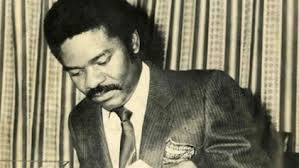
Veteran journalist and co-founder of Newswatch magazine, Ray Ekpu, has recounted how the assassination of Dele Giwa, the magazine’s founding editor-in-chief, frightened his five-year-old son into abandoning his dream of becoming a journalist.
Ekpu spoke on Monday at the launch of Dele Giwa’s Granite Journalism at the Nigerian Institute of Journalism (NIJ) in Lagos.
The book features some of Giwa’s writings published in Daily Times, Sunday Concord and Newswatch, alongside interviews and essays examining his journalism and legacy.
Giwa was killed on October 19, 1986, when a parcel bomb delivered to his residence in Ikeja, Lagos, exploded during the military administration of Ibrahim Babangida, who ruled Nigeria from 1985 to 1993.
Recalling his relationship with the late journalist, Ekpu said their families lived in a duplex in Ikeja and maintained a close relationship.
He said his son had admired Giwa and wanted to follow in his footsteps until the assassination changed his outlook.
“My five-year-old son used to tell me that he would like to be a journalist like Daddy Uncle Dele. But a few days after Dele’s assassination, my son came to me and said, ‘Daddy, I have changed my mind,’” Ekpu said.
He recalled asking his son what he had changed his mind about, only for the child to respond that he no longer wanted to become a journalist because he feared being killed like Giwa.
According to Ekpu, the incident demonstrated that even a young child could understand the dangers associated with journalism.
“Today, the guy works in a different profession far away from journalism,” he said.
Ekpu lamented that efforts by Newswatch and other members of the media community to secure justice for Giwa had yielded no result in the 40 years since his death.
He said the magazine’s team worked with their late lawyer and friend, Gani Fawehinmi, for several years to pursue justice, but their efforts were frustrated by what he described as “the forces of oppression”.
“So, at this point, all we can do is to leave the criminals who assassinated our partner, friend and brother in the able hands of God Almighty because the good Lord says vengeance is mine,” he said.
Ekpu explained that the book launch was not intended to mourn Giwa but to “give presence to his absence”.
He said the publication, which he edited, contains Giwa’s articles from Daily Times, Sunday Concord and Newswatch, two interviews he granted to a radio station and a newspaper, and essays on his journalism and legacy written by 16 Nigerian writers.
‘Dele Giwa fought many battles with his pen’
Ekpu described journalism as a dangerous profession, noting that practitioners face risks while covering protests, riots, political campaigns and wars.
He cited a report by the International Federation of Journalists, which stated that 128 journalists and media workers were killed worldwide in 2025.
The veteran journalist also lamented that many journalists had been killed in Nigeria over the past four decades without their perpetrators being punished.
He said credible journalism was rooted in the pursuit of truth, adding that people opposed to the truth often targeted journalists.
Citing Niyi Osundare’s book, Truth Is Trouble, Ekpu said the truth could not remain concealed indefinitely.
“But I say to you, whether truth is trouble or not, truth must be told if society is to move in the right direction. And those who work in the profession of truth-telling ought to be protected in Nigeria. But they are punished rather than protected,” he said.
Ekpu criticised governments at all levels for failing to make serious efforts to address the killing of journalists, arguing that many had lost their lives simply for telling the truth.
“Whoever said that ‘The pen is mightier than the sword’ did not have Nigeria in mind,” he said.
He described Giwa as a patriot who used his journalism to advocate a better Nigeria.
“Dele Giwa was a patriot to his fingertips. He fought many battles with his pen for a better Nigeria,” Ekpu said.
He noted that several buildings had been named after Giwa in recognition of his contributions to journalism but stressed that more work remained to achieve the Nigeria the late journalist envisioned.
“It is not yet Uhuru. It is not yet time for journalists to relax because there is still a lot of work to do to achieve the goal of having a better Nigeria than what we have now,” he said.