Special Report: How insecurity is disrupting farming, deepening food crisis across Kwara North communities
For more than two decades, farming has been the main source of livelihood for Idris Alhassan, an indigene of Lafiagi in Kwara State. As a farmer and father of three, Alhassan has depended on his harvests to provide for his family and support his children’s education. But the road that once led to his farm has now become a source of fear.
Recounting how much he made from farming before the growing insecurity in the area, Alhassan said he invested more than N5 million in farming in late 2024 and early 2025 and harvested 100 bags each of maize, beans, sorghum and millet. He said maize and sorghum sold for about N30,000 per bag, millet for N28,000, and beans for N45,000 per bag.

“Before the menace of insecurity, I made nothing less than N13.3 million annually in gross sales from the harvest of sorghum, millet, beans and maize. That was what I gained after expenses. But last year, I invested the same amount of money in my farm, but unfortunately, I barely harvested 25 bags of beans, maize, 25 bags of sorghum and 10 bags of millet,” he said.
Alhassan said the losses were caused largely by the fear of armed men locally known as bandits, which affected his ability to access and properly supervise his farmland. The decline in his farm income has also affected his ability to pay his children’s school fees and support their education.
“I have three children named Asmau Idrees, Ibrahim Idrees and Fatimah Idrees. Asmau has been given admission to study at Al-Hikmah University, but I couldn’t provide for her admission payments from last year till now because of the loss of unharvested products from my farm. Ibrahim, who is supposed to write JAMB and seek admission this year, can’t further his education either. It is only Fatimah, who is in secondary school, who has the opportunity to go to school. The education of my children has been stopped because I couldn’t provide for them,” he said.
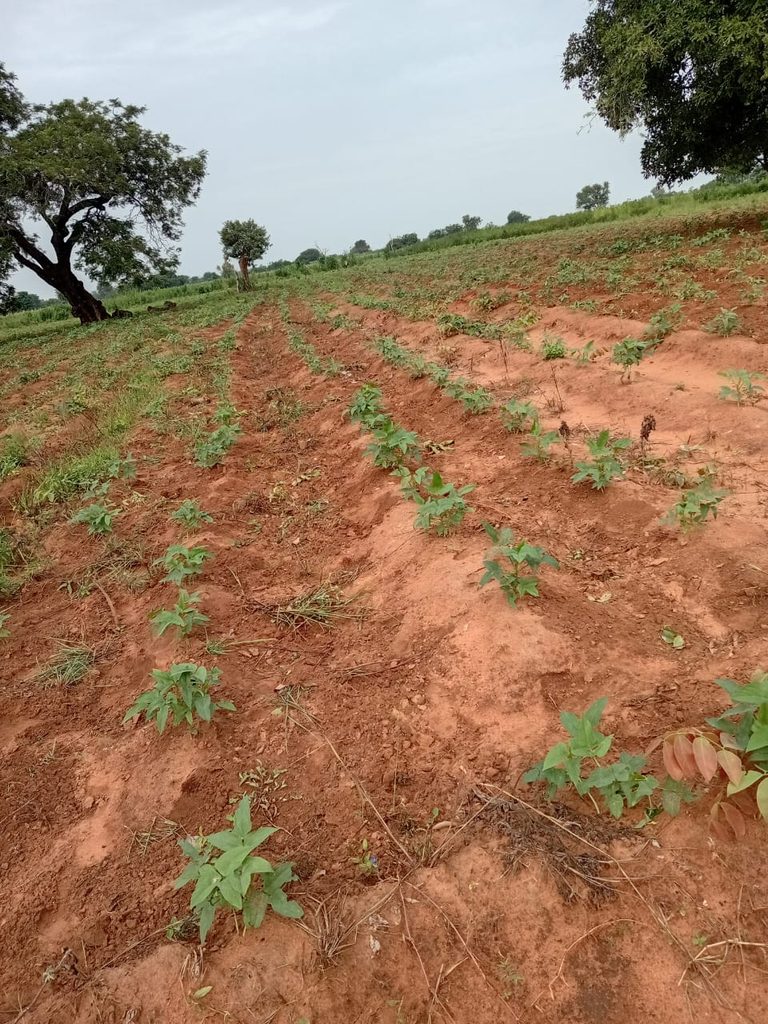
The impact of insecurity, Alhassan said, has also affected his sibling, who studied at Kwara State University, Malete. He said the sibling depended on proceeds from farming to support himself in school but could not continue his education after insecurity disrupted access to their farmland.
“Whenever he farms and harvests, he uses the money to take care of himself in school. But now that the farm is under siege, he couldn’t find any other way to further his education from 300-level up to graduation. It is so sad to see that your hard-earned money is being wasted somewhere without having any power to claim it,” he said.
Like other residents of Lafiagi, Alhassan said he avoided farms located far from residential areas for fear of attack or abduction. When he eventually summoned the courage to visit his farm earlier in 2026, he said he discovered that more than half of the crops had either been eaten by cattle or harvested by unknown persons.
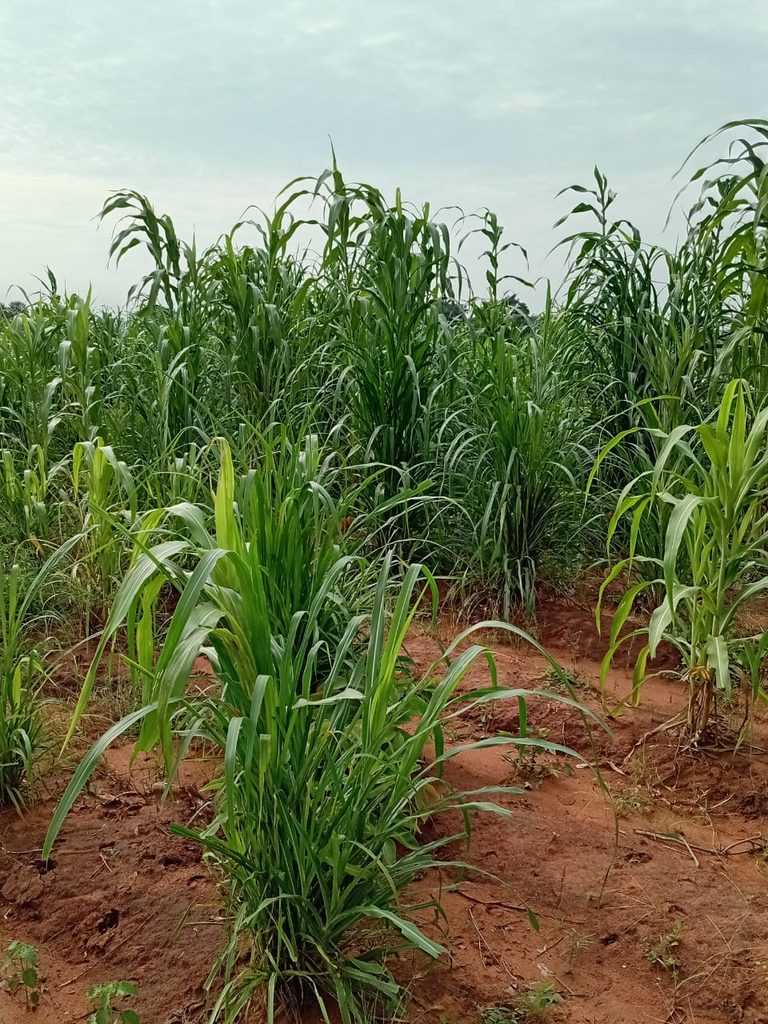
Alhassan now relies on the small portion of land beside his house for farming and survival. He said the situation has reduced the amount of time he spends monitoring his crops and has consequently affected his output.
“I dare not go to the farms that are far from home because I will be kidnapped and a huge ransom will be demanded. I have to be farming for survival on the land I can access. Still, it is out of fear of being kidnapped. I don’t actually know how those people, the bandits, know the kind of person someone is and how much that person can provide. It is as if they know you very well,” he said.
“So, I am farming the little portion of land that is accessible out of fear, and that also affected my farms because what I was supposed to spend at least 10 hours monitoring, I hardly spend three hours. By implication, it affected what I planted because of improper supervision.”
Farming communities caught in insecurity
For generations, farming has been the backbone of livelihoods in communities across Kwara North, particularly in Edu Local Government Area and the Lafiagi Emirate. The region’s large and fertile land has supported rice production and other agricultural activities, providing food and income for thousands of rural households. In some areas of the North Central, up to 94.2% of farmers have abandoned their farms due to threats and fear of attack, further weakening local food production.
But the relationship between farmers and their land has increasingly been disrupted by insecurity. Across parts of the Lafiagi Emirate, farmers say fear of kidnapping and attacks has forced them to abandon large portions of their farmlands, leaving some farming communities deserted during critical periods of the agricultural cycle.
In Bokungi, Edu LGA, four rice farmers were reportedly abducted in November 2025 while harvesting and packaging their rice. Reports also indicated that insecurity had left several farming settlements deserted because farmers feared attacks during the harvest period.
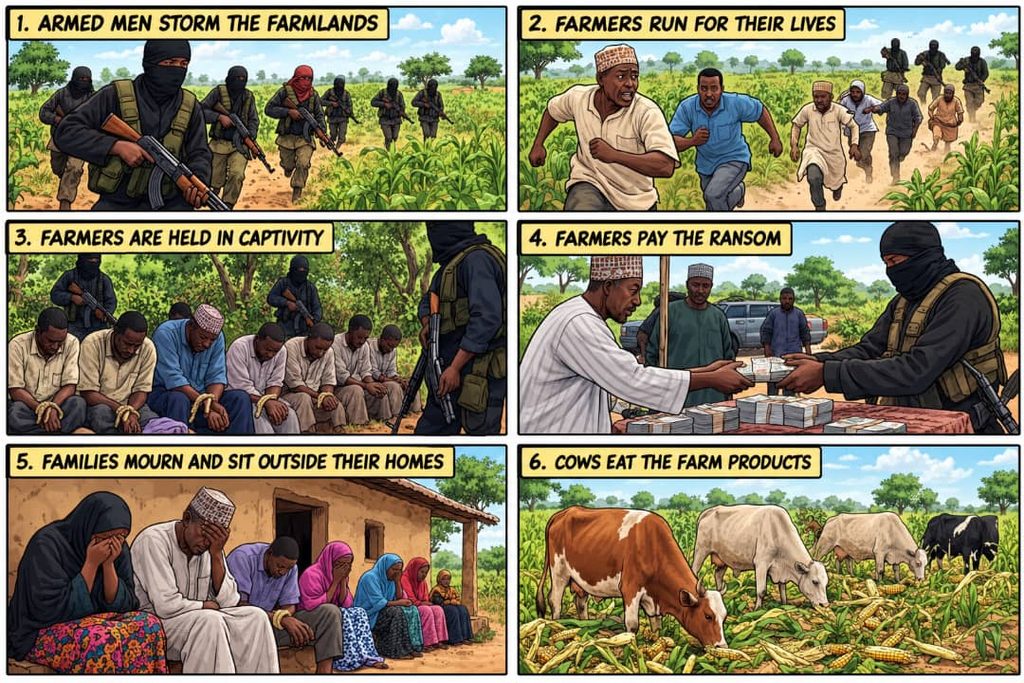
In September, gunmen reportedly killed 10 people, including a pregnant woman, in Matogu village, Patigi Local Government Area of Kwara State. Similarly, in April 2025, armed men attacked a vigilante group in Kemanji, Kaiama Local Government Area, killing more than 15 vigilantes and villagers, according to reports.
Armed Conflict Location and Event Data (ACLED), an organisation that tracks violent incidents across Nigeria, estimates the attacks resulting in at least two deaths every three days in the state. This recent stigma has left the hopes of locals who depend on farming for livelihoods hanging in the balance
A N13 million loss
For Manzuma Aliyu, a rice farmer from Lafiagi, 2025 was supposed to be a year of significant returns. In January 2025, the 48-year-old farmer said he invested more than N7 million in 15 hectares of farmland, hiring a tractor and workers and purchasing chemicals for the farm.
“I hired a tractor, workers and chemicals for the preservation of the farm with the aim of acquiring profits, as I do every year. But I lost everything last year,” he said.
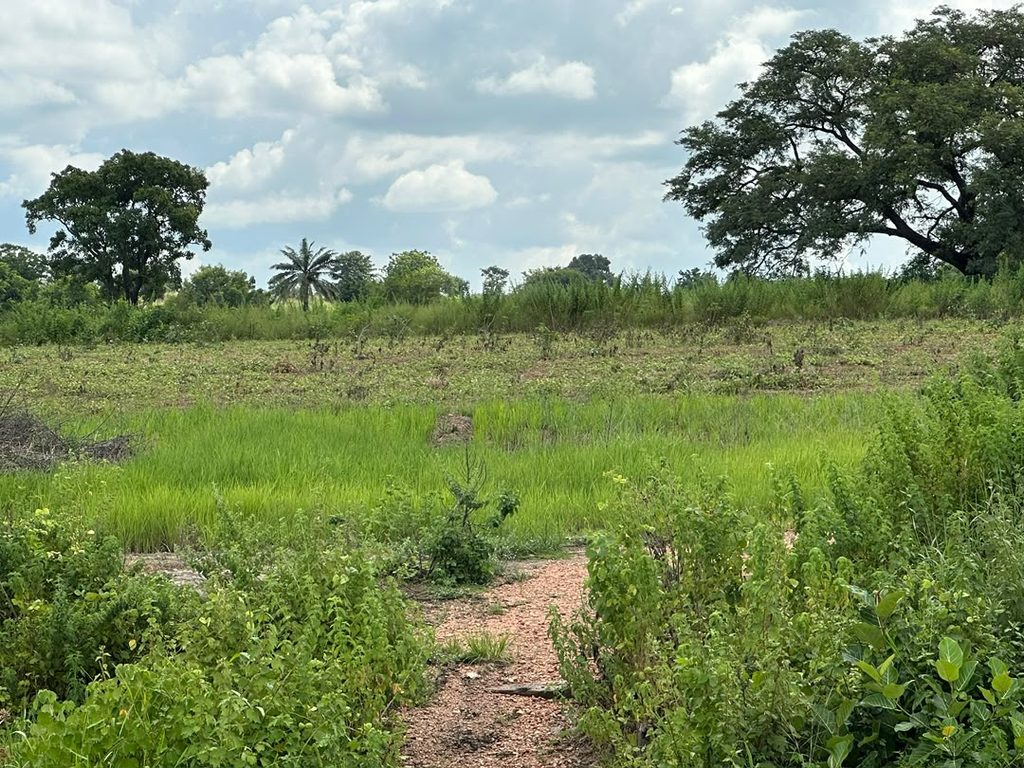
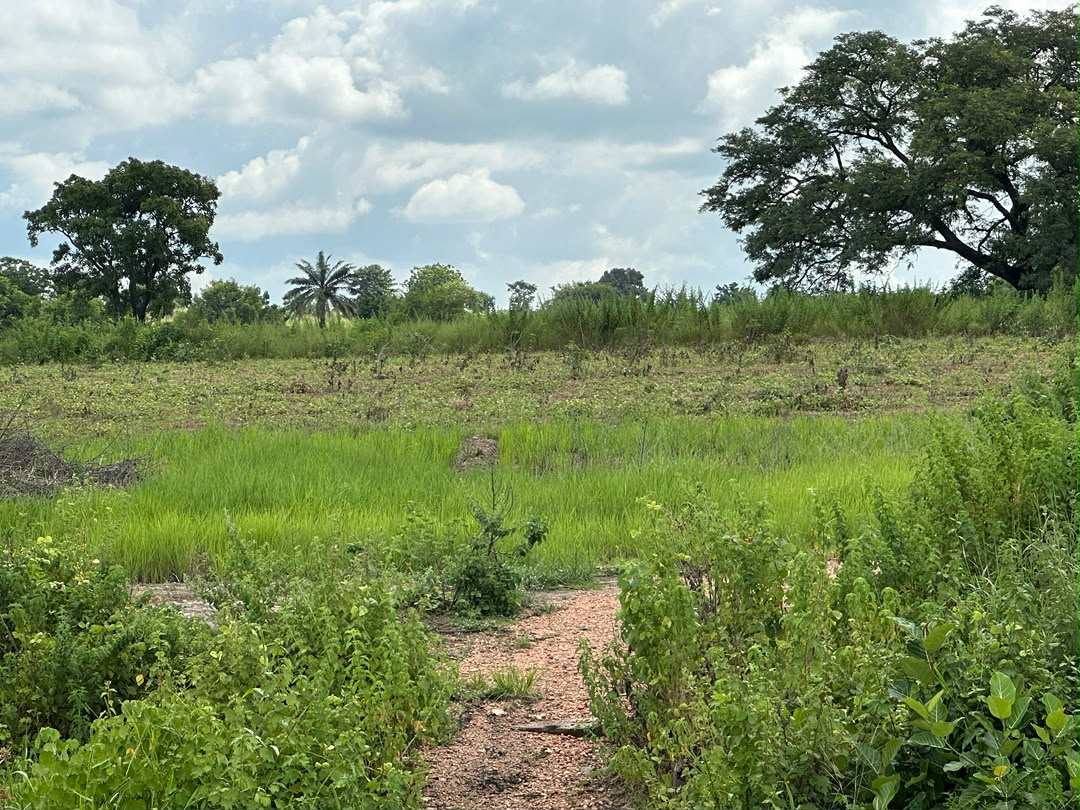
Aliyu farm: Image Credit: Faruq Ibrahim
Aliyu said his hopes of a fruitful harvest were cut short after one of his farm workers reported seeing gunmen around the farmland. At first, he said he did not take the warning seriously, but his concerns changed when the armed men eventually stormed the farm while he was there.
“I have not been to my farm since that time,” Aliyu said. “Sometimes they block the route entirely, and other times they send threats that make it unsafe for us to go. That affected the crops, timing and the harvest.”
Aliyu said he previously produced between 1,200 and 1,500 bags of rice annually, supplying buyers from different parts of the country. But he said he lost his entire harvest after he could no longer access the farm.
“Annually, I used to produce nothing less than 1,200 to 1,500 bags of rice, but last year, when the insecurity started, I lost everything because I could not have access to my farm,” he said.
Aliyu estimated that he lost more than N13 million of his investment and expected returns as a result of disruption and insecurity. He also said he lost customers who travelled from different parts of the country to buy his produce.
The end of a family business
For Aliyu, the consequences of insecurity extend beyond farming. His family has also stopped operating a filling station that had served residents of Lafiagi for decades.
“My family filling station, Manzuma Yebozokoro and Son Nigeria Limited, is the first filling station that was founded around the 1980s in Lafiagi in the whole of Edu and Patigi, and it provided job opportunities for more than 20 residents working as petroleum attendants,” he said.
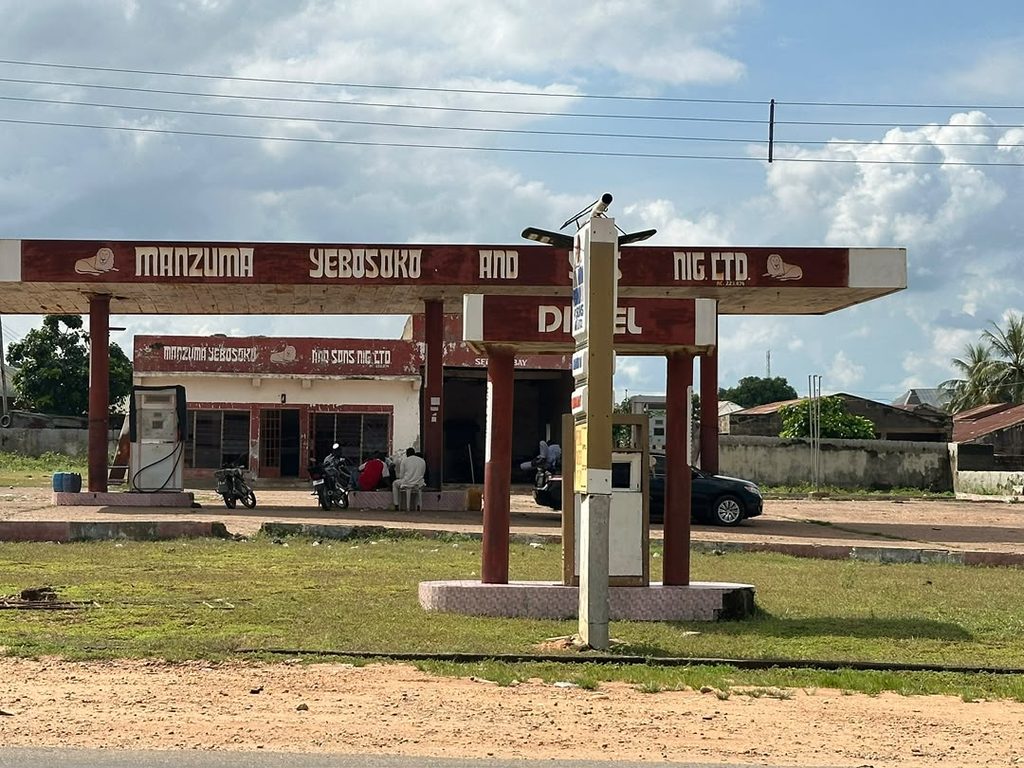
Aliyu explained that the business eventually stopped operating after his brother became a target of kidnappers and two attempts were made to abduct him. “Despite this, we didn’t operate it again because a brother of mine has been a target of kidnapping,” he said.
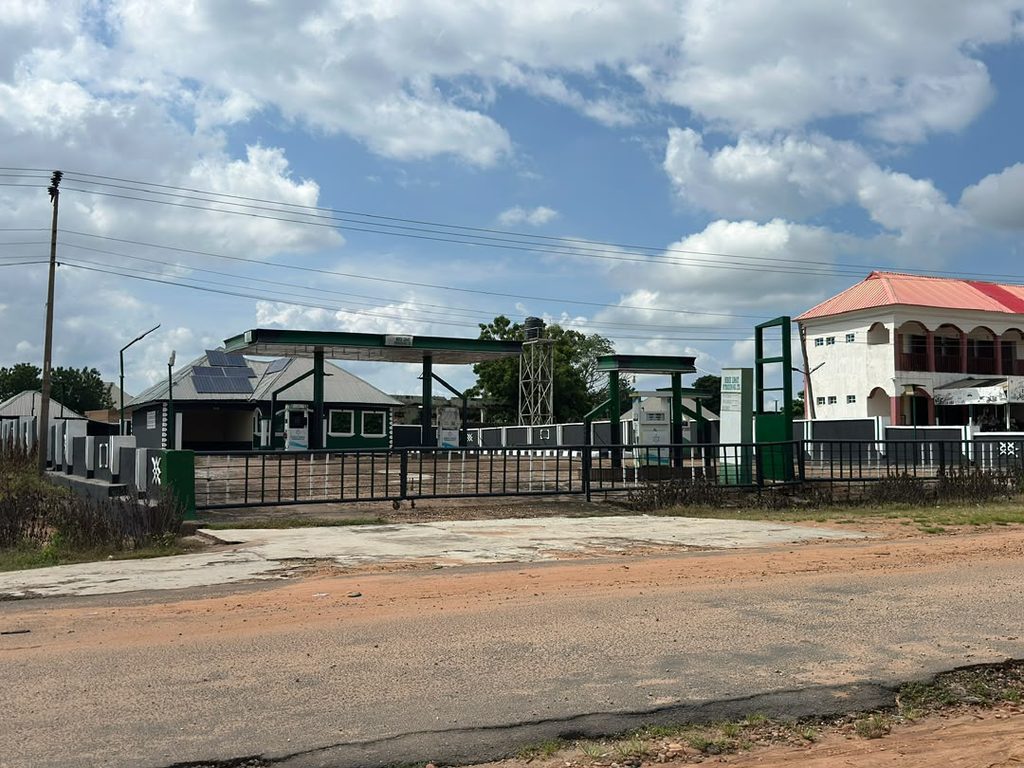
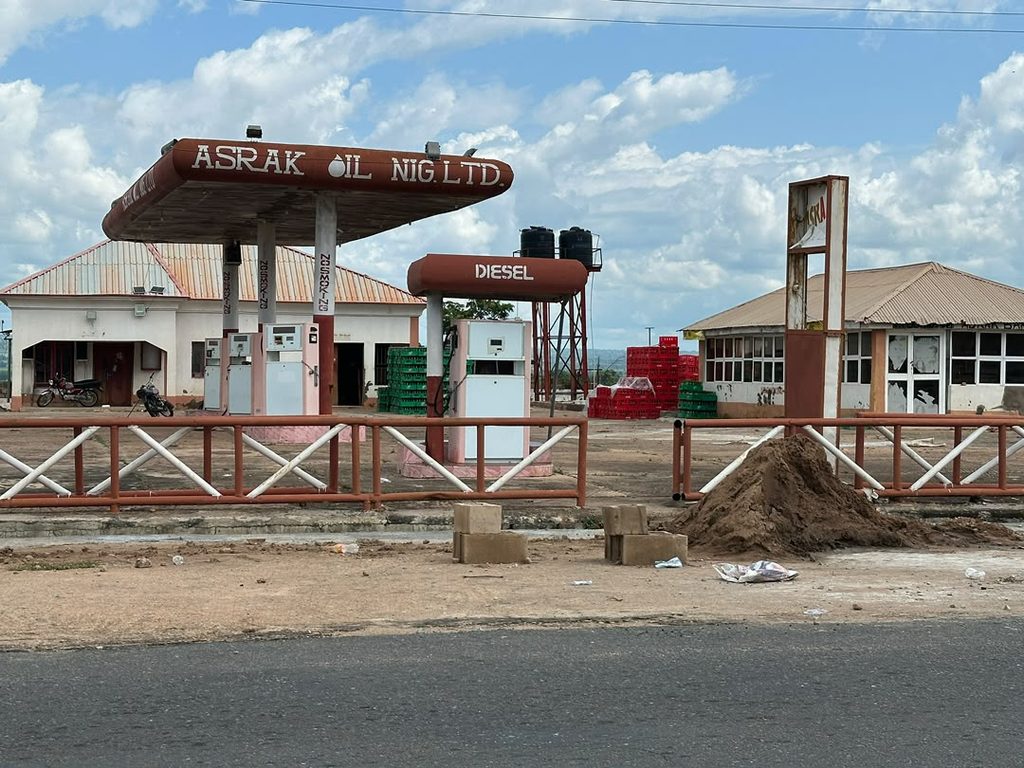
He added that other filling stations, including Kasheco Petroleum Nigeria Limited and Asrak Oil Nigeria Limited, were also shut down because of threats and fears of kidnapping and killings.
Gbugbu: A market disrupted by insecurity
The impact of insecurity has also been felt in Gbugbu, a major market serving communities in the area. The Emir of Lafiagi, Alhaji Muhammed Kudu Kawu, described the market as a major commercial centre for Edu and Patigi local government areas.
“Gbugbu Market is the single biggest commercial opportunity in the entire Edu/Patigi Local Governments today,” the Emir said.
But farmers like Aliyu say insecurity has disrupted the market’s role in the agricultural economy. He alleged that when armed groups take control of farms, they sometimes take farm produce to the market for sale.
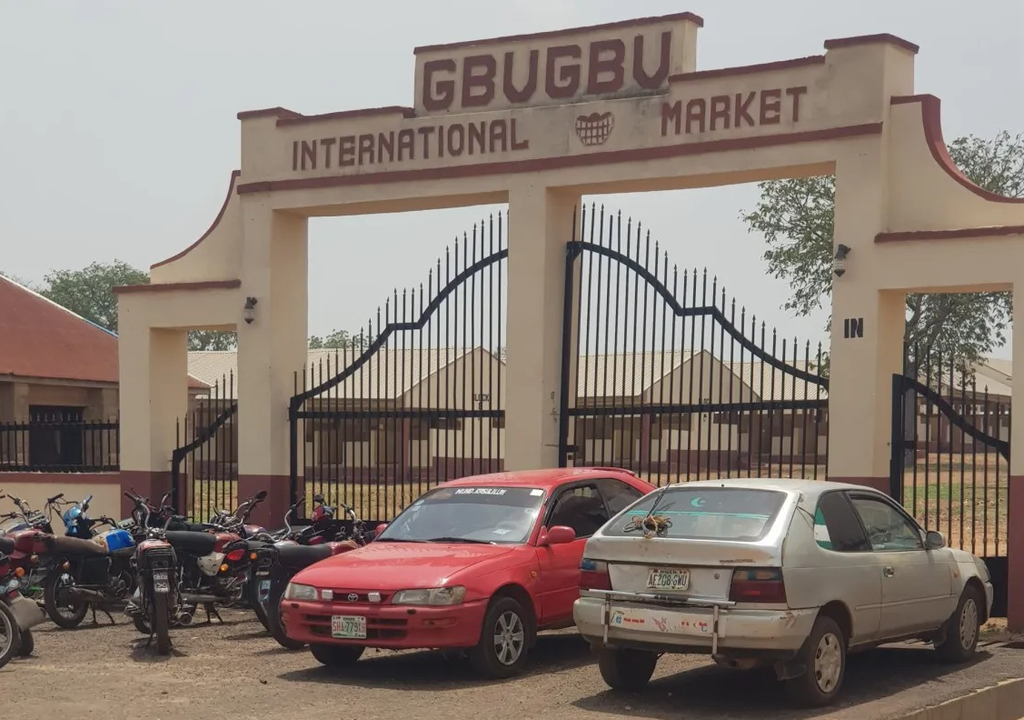
“Whenever the bandits take control of a farm, they take it to the market for selling, and there is nothing you can do about it. This was the reason behind the government closing the market in 2025,” he said.
The local authorities shut down Gbugbu Market in 2025 amid security concerns, a development that affected farmers and traders who depended on the market.
Harvests under threat
For many farmers like Aliyu, the route to the farm has become a dangerous one, affecting their ability to plant, monitor and harvest their crops. In some cases, the fear has forced farmers to abandon their communities altogether.
“I am no longer a farmer by choice. Fear chased me away,” said Jibril AbdulRahim, a middle-aged farmer from Patigi who has relocated to Lagos State, where he now works as a motorist for survival.
“The last time they kidnapped me, they took me from my farm. They knew where I was because they had been watching us. They have local informants who are working for them and give them accurate and timely information about us,” he said.
Jibril said his family was forced to sell harvested rice to raise money for his ransom after he was held for days in a kidnappers’ den.
“They beat me and told me to call my people. We sold rice worth N10 million just to bring me back alive. How do I go back to the farm again or continue living in that area?” he asked.
Another farmer, Yakubu Muazu, from Lata-na community in Lafiagi, said the fear of attack has transformed the way farmers work.
“We used to leave home early and return late from the farm before the banditry,” he said. “Now, if you go to your farm, you are going to meet with death. They come with guns and bikes. Sometimes they tell you straight that if you don’t pay, you will not leave the farm alive.”
Muazu said after his brother was abducted, the kidnappers demanded N20 million in ransom, forcing the family to sell their rice and maize farms to raise the money.
“We lost our farm products, we lost our money, we lost our labour and we lost our inheritance,” he said.
Insecurity is becoming an agricultural productivity crisis: Expert
Azeez Salawu, a food practitioner and Executive Director of Community Action for Food Security (CAFSe), said insecurity is increasingly affecting agricultural productivity and should no longer be viewed only as a security issue.
“Insecurity is now fast becoming an agricultural productivity issue, not just a security issue, because when a farmer is afraid to access his farmland, the immediate consequences are not only a loss of crops for the farmer but also the destruction of the entire production cycle,” he said.,
“If farmers can’t access the land, maybe during the reproduction period, weeding, planting or even harvesting, the land has become unproductive.”
Salawu explained that agriculture operates according to a biological calendar, meaning farmers cannot indefinitely postpone key activities without consequences for production.
“This is really concerning because agriculture itself operates on a type of biological calendar. You can’t simply postpone planting indefinitely and expect the same harvest when you resume. If insecurity causes farmers to miss all these biological periods of farming activities, it affects production,” he said.
He warned that reduced production could contribute to higher food prices because farmers who continue cultivating under dangerous conditions often face additional costs.
“Also, farmers who continue to cultivate are increasingly taking risks and often gamble with their lives, and in return, it must show in the cost of production because the excessive amounts of the products have been reduced. Those who manage to produce will also make the prices higher, and directly or indirectly, it affects the entire country,” he said.
Salawu said food insecurity in Nigeria is driven by several factors, including production costs, transportation, exchange-rate pressures, climate and market conditions, but insecurity can amplify many of those pressures.
He also pointed to the disruption of agricultural labourers, saying people who normally work in weeding, planting, processing and other farming activities can become displaced when insecurity spreads.
“The people who normally provide the labour of weeding, planting and other farming services, including processing, become displaced. As a result, the farmers who remain on the farm risk struggling to find labour, and this creates many effects on farming practices that rely on many people,” he said.
“At the end of the day, lower outputs and higher costs of selling the one that manages to produce. So, insecurity for farmers is not all about losing the farm, but losing the entire livelihood.”
The consequences, he added, extend beyond individual farmers to other parts of the agricultural supply chain.
“The effects are far beyond the community of that farmer. For example, if a farmer abandons his farm in Kwara State, it is not only the farmer who loses income; the labourer also loses the opportunity to work to make ends meet, and the transporters lose a trip because they are to take the products from one community to another,” he said.
Why government must step in
Salawu called for improved protection for farmers and better food-security data to help the government understand the scale of agricultural disruption caused by insecurity.
“The government should provide heavily armed security posts in all farming communities, including the surveillance of the areas with modern equipment,” he said.
He also called for a stronger food-security data system to track communities affected by insecurity, abandoned farmlands and changes in food prices.
“Nigeria needs a stronger food security data system. We should be able to know which communities are being affected and are no longer cultivating, how farmlands are being affected, and what happens to prices in the local market,” he said.
He further suggested a community-based early-warning system involving farmers, religious and traditional leaders, local government authorities and security agencies.
“Farmers, religious leaders, traditional leaders, local government authorities and the security agencies should have a mechanism for rapidly sharing information about emerging threats. Prevention is much cheaper than responding,” he said.
For farmers like Alhassan, Aliyu, Jibril and Muazu, however, the consequences of insecurity are already being felt.
The farms that once paid school fees, supported businesses and sustained families have become places many are now afraid to enter. As more farmers stay away from their fields, the consequences could extend beyond the farms themselves, affecting the availability and cost of food for communities across Kwara North.