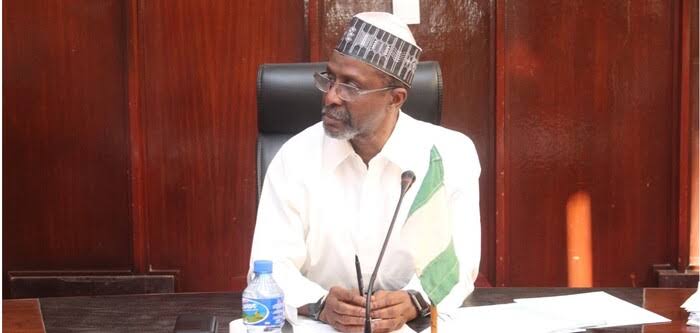

Kwara reaffirms commitment to grassroots development through ACReSAL CRF initiative
The Kwara State Government has reaffirmed its commitment to grassroots development, agricultural growth, and environmental sustainability through the Community Revolving Fund (CRF) initiative under the Agro-Climatic Resilience in Semi-Arid Landscapes (ACReSAL) Project.
Governor AbdulRahman AbdulRazaq stated this on Wednesday during the opening of a two-day Revalidation, Retraining and Post-Disbursement Support Programme for beneficiaries of the Community Revolving Fund held at E-Phoenix Hotel, Ilorin.
Represented by the Commissioner for Environment and Chairman of the State Steering Committee for the ACReSAL Project, Nafisat Musa-Buge, the governor described the CRF initiative as a strategic intervention aimed at improving livelihoods, strengthening community resilience, and expanding economic opportunities across benefiting communities in the state.
Musa-Buge said the programme was designed to equip beneficiaries with practical knowledge, retraining, and post-disbursement support needed to ensure sustainability and long-term impact of the intervention.
She disclosed that the first phase of the programme covers 50 Community Interest Groups drawn from 10 communities, benefiting about 1,000 residents across the state.
According to her, arrangements are already underway to expand the number of beneficiaries to about 1,400 following growing interest in the scheme.
The commissioner explained that each participating community receives 25,000 dollars shared among five Community Interest Groups within the communities.
She noted that the CRF operates as a repayable loan scheme in line with World Bank guidelines, adding that beneficiaries are expected to repay the loans within eight months after disbursement.
Musa-Buge said the revolving nature of the fund would allow repayments from current beneficiaries to be reinvested in supporting other members of the communities, thereby ensuring continuity and sustainability of the initiative.
She stressed that the programme goes beyond financial support, describing it as a framework for community empowerment, environmental restoration, and inclusive economic growth.
The commissioner urged stakeholders to embrace practical solutions capable of addressing community challenges while ensuring transparency, accountability, and active participation throughout the implementation process.
She added that discussions during the programme would focus on strengthening the agricultural value chain, reducing post-harvest losses, and simplifying implementation processes to make the intervention more beneficial to rural communities.
Musa-Buge expressed confidence that the programme would boost agricultural productivity, support small-scale farmers, and strengthen resilience against environmental and socio-economic challenges in the state.
Earlier in his welcome address, the State Project Coordinator of ACReSAL, Shamsideen Olatunbosun Aregbe, said the programme was organised to ensure sustainable growth and improved productivity among beneficiaries of the Community Revolving Fund.
He explained that the exercise would help revalidate beneficiary groups, retrain them on improved agricultural practices, and provide post-disbursement support to address operational challenges.
“The success of ACReSAL rests on your success,” Aregbe said, urging beneficiaries to see the programme as an opportunity to relearn and recommit themselves to productive agricultural activities.
He also commended the support of the Kwara State Government, the World Bank, traditional rulers, and facilitators for their contributions to the success of the project in the state.
In his goodwill message, the Permanent Secretary of the Ministry of Environment, Dr. Abubakar Ayinla, lauded the impact of the ACReSAL project on communities across Kwara.
He urged beneficiaries and Community Interest Groups to make judicious use of the support provided, noting that the partnership between the state government, ACReSAL, and the World Bank had continued to improve livelihoods and promote environmental sustainability.
Ayinla disclosed that the intervention had already recorded notable achievements, including environmental improvements, establishment of offices, and support for community-based economic activities.
He added that communities that effectively utilise the funds and meet project expectations would continue to benefit from additional interventions under the programme.
Also speaking during separate presentations, the Natural Resource Officer and CRF Desk Officer, Salihu Hussain, alongside the Project Engineer, Abubakar Hussein, took participants through an overview of the intervention programme, revalidation procedures, and documentation processes, including the signing of finance agreements and memoranda of acceptance.
The event featured interactive sessions and goodwill messages from stakeholders and participants, who described the retraining and support programme as timely and impactful for farming activities, community development, and sustainable economic growth in Kwara State.