
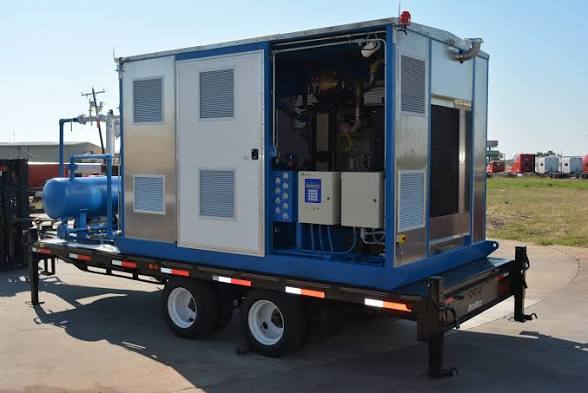
FG plans mobile CNG stations to reduce farmers’ production costs
The federal government says it is considering deploying mobile compressed natural gas (CNG) stations to rural communities to help farmers switch from petrol and diesel-powered irrigation systems to cheaper gas alternatives.
The initiative is aimed at reducing agricultural production costs and improving productivity, particularly in communities with limited access to gas infrastructure.
Ismaeel Ahmed, chairman and chief executive officer of the Presidential CNG Initiative and Electric Vehicles (Pi-CNG & EV), disclosed this at a roundtable in Abuja organised by the All Progressives Congress (APC) and the Progressive Strategy Roundtable.
Ahmed said President Bola Tinubu had authorised the initiative to intensify its activities, adding that the government was committed to accelerating the expansion of gas infrastructure across the country.
However, he identified inadequate gas supply and delays in obtaining licences for CNG refuelling stations as major challenges facing the programme.
He appealed to the Nigerian Midstream and Downstream Petroleum Regulatory Authority (NMDPRA) to fast-track the licensing process for investors willing to establish CNG facilities.
While acknowledging the importance of maintaining strict safety standards in gas infrastructure development, Ahmed urged the regulator to streamline its approval procedures to support the government’s expansion plans.
According to him, the proposed mobile stations would address the shortage of gas infrastructure in remote communities where private investors may consider permanent CNG facilities commercially unviable.
He said the government began exploring the initiative after consultations with state governments, particularly in northern Nigeria, revealed increasing demand for CNG beyond the transportation sector.
Ahmed noted that farmers were showing growing interest in adopting gas-powered irrigation pumps as alternatives to petrol and diesel-powered equipment to lower operating costs.
Citing Jigawa State, he said the governor had informed the initiative that more than two million farmers in the state could benefit from access to cheaper energy for irrigation.
He explained that mechanical irrigation pumps could cover approximately three hectares of farmland, compared with solar-powered pumps, which typically cover about one hectare.
Although solar-powered irrigation systems are being promoted as alternative energy sources, Ahmed said some farmers preferred mechanical pumps because of their wider coverage and higher operational capacity.
He added that mobile CNG stations would improve access to gas in underserved locations, particularly rural communities where the absence of permanent refuelling facilities had hindered adoption.
Meanwhile, Musiliu Oseni, chairman of the Nigerian Electricity Regulatory Commission (NERC), said electricity production costs were estimated at about N200 per kilowatt-hour.
He said the commission was pursuing measures to improve electricity supply through investments in generation, mini-grids, debt recovery and net billing.
On fuel availability and energy security, Mustapha Lamorde, a representative of the NMDPRA, disclosed that more than 26 refineries had been licensed across the country.
He added that the government was strengthening fuel supply monitoring, with a short-term target of achieving 30 days of supply coverage and an eventual plan to build strategic reserves capable of meeting national demand for 90 days.