Timeline of Events | One year after the end of Assad’s regime in Syria
By Abdulazeez Abdulsamad
The first wave of anti-government demonstrations against Bashar al-Assad erupted in 2011, marking the beginning of widespread dissent against his regime. Thirteen years later, the government that had withstood war, foreign intervention, and domestic instability finally fell. In December 2024, Russia’s Foreign Ministry announced Assad’s resignation, bringing an end to nearly 24 years of his rule since 2000 and concluding the Assad family’s five-decade dominance over Syria. As of December 8, 2025, the first anniversary of this political transition invites critical reflection on Syria’s post-authoritarian trajectory and the enduring consequences of the country’s prolonged conflict.
Here is a timeline of events of the past 365 days since the change of government in Syria.
8 – 31 December 2024
Bashar al-Assad flees to Russia after opposition forces enter Damascus, effectively ending his family five decades rule in Syria.
Syrian fighters who toppled President Assad appoint Mohammed al-Bashir, who was the head of HTS-lead Syrian Salvation Government (SSG) in the northwest area of Idlib, as the country’s caretaker Prime minister.
Ahmed al-Sharaa met senior Syrian Christian leaders at the people’s palace to discuss the safety of the Christian minority in Syria.
29 January 2025
Syrian General Command during the Syria Revolution Victory Conference in Damascus, appoints al-Sharaa as the president for the transitional period after he has served as the country’s de-facto leader.
2 – 12 February 2025
Syria’s Ahmed al-Sharaa meets Saudi Crown Prince Mohammed bin Salma (MSB) in Riyadh, Saudi Arabia, which marks his first international visit.
Two major organisations of the former Syrian opposition, the Syrian National Coalition and the Syrian Negotiation Commission, announce their allegiance to the caretaker government.
11 – 29 March 2025
Ahmed al-Sharaa signs an agreement with Mazlou Abdi, the commander of the Syrian Democratic Forces (SDF) to incorporate SDF-controlled institutions into the state, establishes border crossings and pledge to fight the remnant of the Assad regime.
He signs an interim constitution for a transitional period of five years, setting a presidential system in motion.
The Syrian transitional government was announced by al-Sharaa at a ceremony at the Presidential Palace in Damascus. Thus, new ministers were appointed, as such the post of prime minister was abolished.
14 May 2025
Syrian President Ahmed al-Sharaa meets US president Donald Trump and the Crown Prince of Saudi Arabia Mohammed bin Salman in Riyadh, Saudi Arabia.
24 September 2025
Ahmed al-Sharaa addresses the general debate of the 80th session of the United Nation General Assembly (UNGA), becoming the first Syrian leader to visit and address the UN since Nureddin al-Alassi in 1967, nearly six decades.
In addition, al-Sharaa attends the 2025 UN Climate Change Conference, making him the first Syrian president to do so since its establishment in 1995.
15 October 2025
Syria’s Ahmed al-Sharaa meets Russia’s Vladimir Putin. Both leaders reiterate the “special relationship” between Moscow and Damascus.
10 November 2025
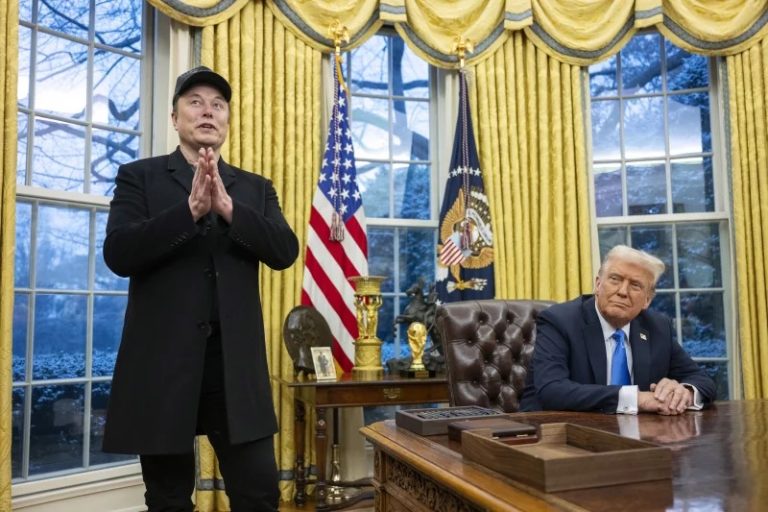
Ahmed al-sharaa meets US President Donald Trump in the Oval office, marking the first visit of a Syrian President to the White Office since Syria gained independence in 1945.
4 – 8 December 2025
UNSC delegation visits Syrian on first trip a year after al-Assad’s fall.
Canada removes Syria from the list of states that support ‘terrorism,’ with a number of Western government lifting broad sanctions on Damascus, notably the United States and the United Kingdom.
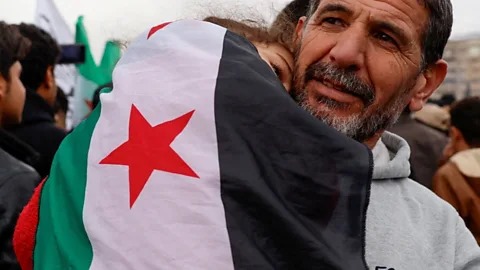
Syrians all over the World are celebrating the national holiday, marking today as ‘Liberation Day’ following the fall of Assad’s regime on December 8, 2024.
What does the future hold?
Syria is in a fragile post-Assad transition following the regime’s fall in late 2024, marked by hopeful refugee returns but ongoing instability, fragmented control between factions (HTS, SDF, Turkish-backed groups, Islamic State resurgence), simmering sectarian tensions (Alawite, Druze), and urgent humanitarian needs, with new investments and diplomatic engagements aiming for recovery amidst security risks and existing sanctions. The situation facing Syria presently covers wide of things ranging from mass displacement, refugee returns, and reconstruction efforts amid Israeli continuous strikes. While some sanctions have been lifted, major financial challenges persist.
For Syria’s Ahmed al-Sharaa, reconstructing the nation takes priority as well as amending Damascus’ relations with other countries of the world.