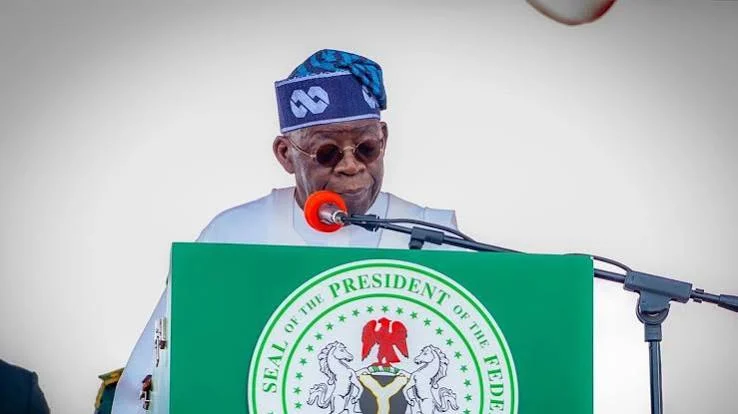
States gets special N435bn for security infrastructure
State governments are receiving billions of naira through a relatively new Federation Account Allocation Committee intervention for infrastructure and security, with available half-year budget implementation reports showing that at least N435bn in revenue was recorded under the funding window by 29 states between January and June 2026.The intervention, classified in state financial records as “State Infrastructure and Security” under the National Chart of Accounts code 11010313, is distinct from FAAC conventional statutory allocations but distributed as regular FAAC revenue. No amount was disbursed for this purpose in the corresponding period of 2025. The data was obtained from Q1 to Q2 budget performance reports from January to June 2026 published on Open Nigerian States and analysed on Thursday.The intervention comes as Nigeria battles worsening insecurity and a huge infrastructure deficit. Following the removal of petrol subsidy, President Bola Tinubu approved the Infrastructure Support Fund for the 36 states in July 2023 to strengthen their capacity to invest in roads, agriculture, health, education, power, water, and security.Of 32 states reviewed, 16 specifically reported a combined N265.50bn under the dedicated State Infrastructure and Security revenue line. Another 13 states reported a combined N169.75bn as other separately disclosed FAAC-related revenue. The combined amount from the 29 states with identifiable receipts stood at N435.25bn. Three states—Adamawa, Anambra, and Oyo—recorded zero actual receipts, while Akwa Ibom’s report did not disclose a figure. Four states—Bayelsa, Edo, Osun, and Rivers—were excluded due to unavailable data.A state-by-state analysis showed Enugu recorded the highest cumulative receipt of N27.02bn among states that separately reported the dedicated line, followed by Gombe (N24.50bn), Jigawa (N19.50bn), Katsina (N19.50bn), Ogun (N19.50bn), Cross River (N17.50bn), Yobe (N17.50bn), Borno (N16.41bn), Bauchi (N14.58bn), Ebonyi (N14bn), Imo (N14bn), Kano (N14bn), Kwara (N14bn), Taraba (N14bn), Sokoto (N12.50bn), and Kogi (N7bn).Among states classifying the money under other FAAC heads, Ondo reported N31.86bn, Lagos N30.30bn, Abia N24.50bn, Nasarawa N21.24bn, Niger N15.50bn, Benue N14bn, Plateau N14bn, Delta N5.50bn, Ekiti N5.38bn, Kaduna N3.83bn, Kebbi N1.95bn, and Zamfara N1.71bn. The N435.25bn total represented about 10 per cent of the total FAAC allocations and 20.71 per cent of the internally generated revenue of the reporting states during the period.Budget performance varied widely: Gombe received 490 per cent of its annual provision (N24.50bn against a N5bn budget), Bauchi achieved 86.6 per cent, Jigawa 65 per cent, Yobe 48 per cent, Ogun 38 per cent, Enugu 33.8 per cent, Borno 33.2 per cent, Katsina 32.4 per cent, Kwara 28.2 per cent, Kano 22.9 per cent, Kogi 17.9 per cent, Taraba 17.3 per cent, Ebonyi 15.8 per cent, and Sokoto 13.9 per cent.Commenting on the development, CEO of the Centre for the Promotion of Private Enterprise, Muda Yusuf, and economic analyst Aliyu Ilias welcomed the increased revenue allocation as a positive step toward fiscal decentralization and targeted funding. However, both stressed the need for strict public oversight, civic engagement, and transparency to ensure states do not divert funds into unprofitable ventures.State governors, including Enugu’s Peter Mbah, Delta’s Sheriff Oborevwori, Bayelsa’s Douye Diri, Nasarawa’s Abdullahi Sule, and Kaduna’s Uba Sani, have acknowledged the increased inflow of funds under the federal administration’s economic reforms, noting that the allocations expanded their financial capacity to tackle security challenges and drive infrastructure development.