ANALYSIS | Bridging the gulf in the Gulf
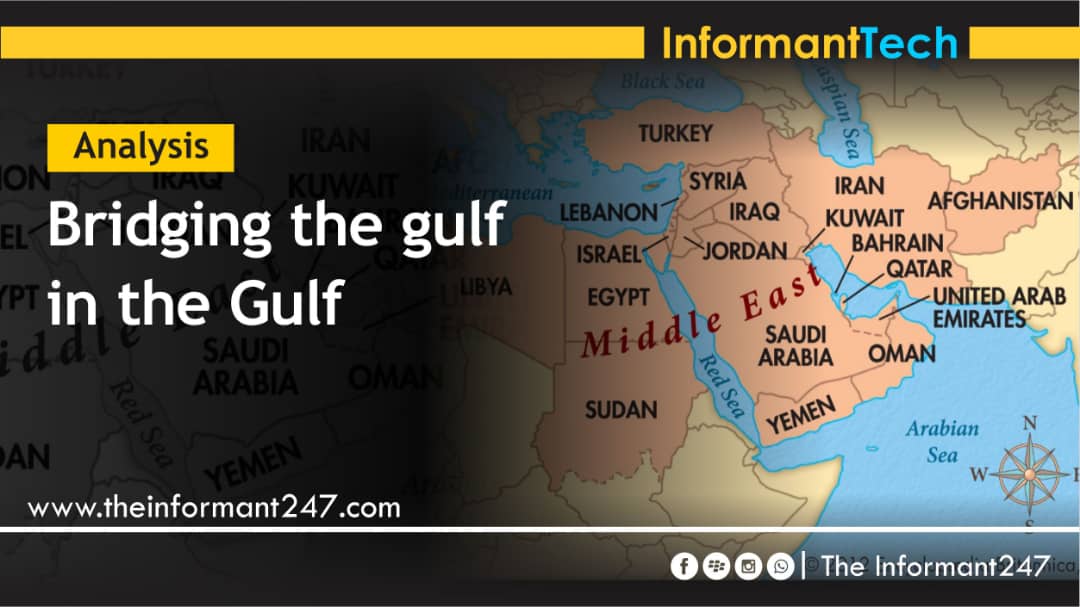
The rebuilding of diplomatic relations, renewed political engagement and expanding cultural exchanges are increasingly becoming the new norm in the Middle East, a region long regarded as one of the world’s most volatile geopolitical theatres. Setting aside decades of hostility, several formerly estranged neighbours have returned to the negotiating table in pursuit of dialogue and mutual interests. Despite these encouraging developments, deep-seated political and ideological differences continue to define interstate relations across the region. Competition over strategic resources, particularly oil, has long fuelled regional tensions while simultaneously attracting external powers seeking to advance their own geopolitical and economic interests.
Peace agreements often begin with optimism, only for a spark of violence to reignite tensions and plunge parties back into an unending vicious cycle. The 1978 Camp David Accords, the Oslo Accords, and the 2002 Arab Peace Initiative offered important pathways to peace, but none succeeded in delivering a lasting settlement. Nevertheless, the Middle East’s path towards peace is not entirely bleak. In recent years, diplomatic narratives have begun to shift, with several regional actors demonstrating a renewed commitment to dialogue and engagement.
Trump’s Abraham Accords
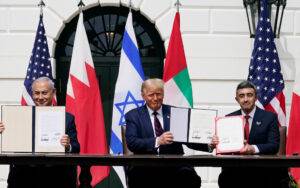
The turning point came in September 2020 with the signing of the Abraham Accords, brokered by the administration of then-US President Donald Trump with the support of his Senior Adviser, Jared Kushner. The agreements marked one of the most significant diplomatic breakthroughs in the Middle East in decades. The Abraham Accords ushered in a new phase of regional cooperation. The normalisation of relations between Israel and the United Arab Emirates, Bahrain, Morocco and Sudan expanded diplomatic, economic and security cooperation across the region.
For many observers, the agreements represented a widening of the space for peaceful engagement in the Middle East. This changing diplomatic atmosphere was seen in Israeli Prime Minister Naftali Bennett’s historic visit to Bahrain, where he was received by Crown Prince Salman bin Hamad Al Khalifa at Gudaibiya Palace. Beyond its symbolism, the visit underscored the willingness of both countries to institutionalise the gains of normalisation and deepen bilateral cooperation.
Ankara’s Soft Power Diplomacy
Beyond the Arab states, Turkey also began recalibrating its regional diplomacy. Ankara’s efforts to repair relations with key Gulf states, particularly the United Arab Emirates, indicate a broader recognition that dialogue and economic cooperation serve its strategic interests more effectively than prolonged rivalry. The rapprochement follows years of tensions between Ankara and Abu Dhabi over competing regional interests and ideological differences.
President Recep Tayyip Erdoğan’s state visit to Abu Dhabi earlier in the month represented more than a ceremonial engagement; it marked another step towards improved regional ties. The signing of several agreements covering defence, trade, technology and investment suggests a shared recognition that cooperation offers greater strategic and economic dividends than continued confrontation.
Erdoğan’s planned visit to Saudi Arabia, his first since the 2018 killing of journalist Jamal Khashoggi at the Saudi Consulate in Istanbul, is widely viewed as an opportunity to reset relations between Ankara and Riyadh. Should both sides succeed in easing their differences, the rapprochement could reduce regional tensions and potentially encourage broader diplomatic engagement involving other regional powers, including Iran.
Saudi’s Gulf position
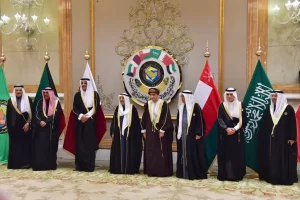
Saudi Arabia played a central role in resolving the Gulf diplomatic crisis, culminating in the Al-Ula Declaration of January 2021, which ended the blockade of Qatar and restored relations among members of the Gulf Cooperation Council (GCC). The agreement marked an important step towards bridging the gulf in the Gulf, with dialogue becoming central to rebuilding regional trust and cooperation.
Doha’s Card
Doha remains a prized asset in the Gulf. Its strategic importance extends beyond its ‘tiny, oil-rich status’. As host of the 2022 FIFA World Cup and a key diplomatic actor, Qatar had become an increasingly important hub for regional mediation and international engagement. Maintaining regional stability was therefore in the collective economic and political interests of the Gulf states.
Underlying these developments is the close relationship between peace, regional stability and economic prosperity. Sustainable development in the Gulf ultimately depends on a stable political and security environment. Doha’s role in facilitating talks between the Taliban and Western governments underscores its growing diplomatic relevance.
Gaps to Peace
Nevertheless, optimism should be tempered by the region’s enduring structural challenges. Yemen and Syria continue to grapple with the devastating consequences of the Arab Spring, while the Israeli-Palestinian dispute remains unresolved. Reviving negotiations over Iran’s nuclear programme also remains essential to long-term regional stability.
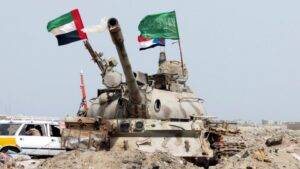
In Yemen, millions of Yemenis remain trapped in a conflict that has persisted since 2015. The humanitarian consequences have been catastrophic, with the United Nations warning that millions face acute food insecurity and displacement. Beyond its geopolitical dimensions, the war continues to exact an immense human cost.
As the de facto leader of the Gulf Cooperation Council (GCC) and one of the most influential states in the Islamic world, Saudi Arabia has a critical role to play in shaping the future of Yemen. While military operations have sought to contain the Houthi insurgency, a durable resolution ultimately requires prioritising humanitarian considerations alongside security concerns. Military force may weaken armed groups, but lasting peace depends on addressing the political and socio-economic conditions that sustain conflict.
A durable peace in Yemen requires an inclusive political settlement in which all major constituencies are adequately represented. Concentrating political and economic power in the hands of a narrow elite is unlikely to produce long-term stability. Rather, broad-based governance offers the best prospect for national reconciliation and sustainable peace. The UN programme to be co-hosted by Sweden and Switzerland in March offers hope for a renewed diplomatic push that could change the trajectory of the conflict for good.
Bashar al-Assad’s Syria
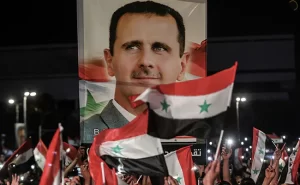
Bashar al-Assad-controlled Syria remains a major flashpoint in the Middle East. What began as domestic unrest has evolved into a deep political crisis, plunging the country further into a seemingly endless quagmire. Now in its 12th year, the Syrian crisis appears increasingly intractable.
A combination of internal discord, regional rivalries and international interference has made the crisis both catastrophic and protracted. With repeated peace efforts yielding limited results, the Syrian people continue to bear the greatest burden. Nearly 90 per cent of Syrians live below the poverty line, while millions have been displaced. Yet, hope for peace remains. The global fight against terrorism in Syria must be pursued with sincerity of purpose, while all actors should engage in good faith and support renewed diplomatic efforts through the United Nations.
Israeli–Palestinian ‘Never-Ending Conflict’
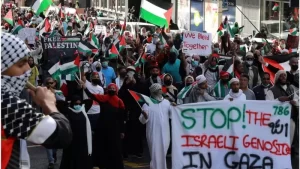
The Israeli–Palestinian conflict remains the most enduring and symbolically significant dispute in the modern Middle East. Despite successive peace initiatives, the core issues of territory, security, refugees and the status of Jerusalem remain unresolved. While the Abraham Accords demonstrated that several Arab states were prepared to normalise relations with Israel without first resolving the Palestinian question, the long-term sustainability of that approach remained uncertain.
Iran’s JCPOA
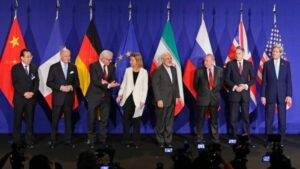
With America’s return to international diplomacy under President Joe Biden and the emergence of Ebrahim Raisi as Iran’s president, the Joint Comprehensive Plan of Action (JCPOA) returns to the negotiating table, with talks entering their final stretch. It is hoped that the nuclear agreement will cool tensions and create the conditions for greater stability between Tehran and the region’s major powers.
A shared commitment to a peaceful, stable and prosperous Middle East remains achievable as the walls of hatred gradually crumble and bridges of friendship are strengthened.