ALDIN strengthens governance, accountability through capacity-building training
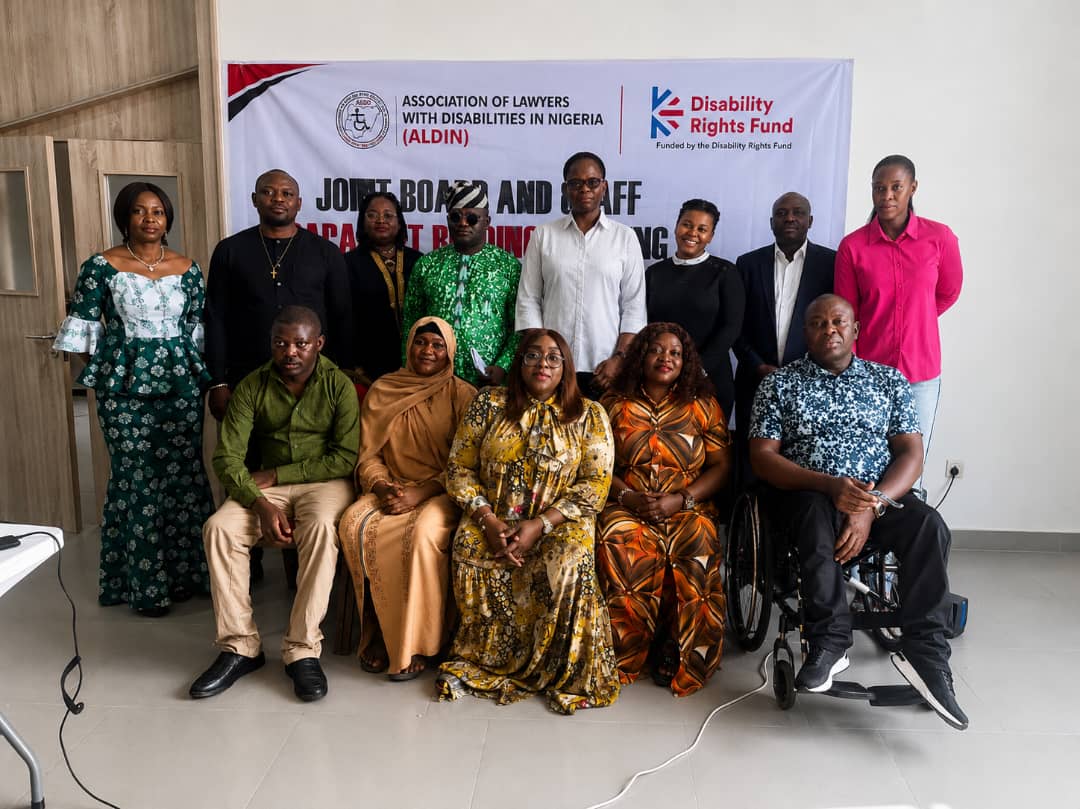
The Association of Lawyers with Disabilities in Nigeria (ALDIN) has reaffirmed its commitment to strengthening governance, accountability, financial management, and disability rights advocacy following a two-day capacity-building training for its officials and staff in Abuja.
The training, held on June 19 and 20, 2026, at The Harbor Hotel and Suites, Durumi, Area 1, Abuja, was themed “Strengthening Governance, Accountability, Financial Management, Strategic Advocacy, and Policy Monitoring for Organisational Effectiveness.”
The programme brought together members of ALDIN’s Management Board, officials, staff, and resource persons to enhance institutional capacity and improve the Association’s effectiveness in advancing the rights and welfare of lawyers with disabilities and persons with disabilities across Nigeria.
Participants noted that effective governance remains the foundation of organisational credibility, sustainability, accountability, and impact. They emphasized the importance of disability-inclusive governance, which ensures meaningful participation of persons with disabilities in decision-making processes and promotes accessible communication systems.
The participants also observed that many civil society organisations, particularly disability-focused groups, continue to face challenges related to governance structures, accountability systems, policy monitoring, fundraising, and long-term sustainability.
According to the communiqué issued at the end of the training, clear separation of responsibilities between governing bodies, management, and staff is essential for organisational effectiveness, while strong financial management systems and transparent reporting mechanisms are necessary to build donor confidence and ensure prudent resource management.
The participants further highlighted the importance of strategic advocacy, stakeholder engagement, and evidence-based policy monitoring in advancing disability rights and influencing public policy. They stressed that board members should possess competencies in governance, leadership, legal compliance, financial oversight, fundraising, programme development, and stakeholder engagement.
At the end of the training, ALDIN resolved to strengthen its governance structures in line with best practices and constitutional provisions, while promoting transparency, accountability, inclusion, integrity, and responsiveness in all organisational processes.
Other resolutions included the development of a comprehensive three-year strategic plan, institutionalisation of regular monitoring and evaluation systems, enhancement of financial management practices, strengthening of disability rights advocacy, and expansion of partnerships with government agencies, development partners, civil society organisations, and private sector stakeholders.
The Association also pledged to promote leadership development, succession planning, and regular capacity-building programmes for its officials, staff, and members.
In their concluding remarks, participants reaffirmed their commitment to building ALDIN into a credible, accountable, inclusive, and sustainable organisation capable of advancing disability rights and improving access to justice for persons with disabilities throughout Nigeria.