Nigeria moves to end defence equipments importation as FG unveils indigenous armoured vehicles
The Federal Government has declared its resolve to end the importation of defence and security equipment, unveiling a roadmap to produce all required military assets locally within the next two to five years.
This was disclosed on Thursday in Abuja during the unveiling of the DICON X-Shield light tactical armoured vehicle and a range of locally manufactured civilian armoured vehicles.
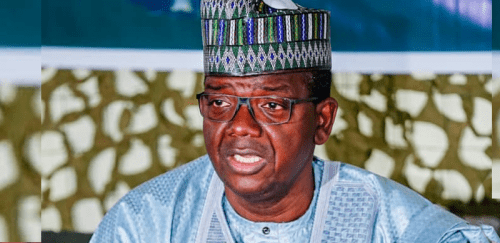
Speaking at the event, the Minister of State for Defence, Bello Matawalle, said the initiative marked the beginning of a broader national strategy to achieve full self-sufficiency in defence manufacturing. The minister was represented by the Director-General of the Defence Industries Corporation of Nigeria (DICON), Major General Babatunde Alaya.
“This is just the beginning. We will do more to ensure that all required defence and security equipment are produced locally, and in two to five years’ time there will be no more importation,” Matawalle said.
He noted that Nigeria’s future defence and security capability would be built locally through indigenous innovation and strategic partnerships, stressing that domestic production would strengthen national security and economic resilience.
“The future of Nigeria’s defence and security capability will be built at home by Nigerian hands through trusted partnerships. Localising production will create skilled jobs, enable technology transfer, conserve foreign exchange and open pathways for export and regional leadership in defence manufacturing,” he added.
Matawalle described the unveiling of the armoured vehicles as more than a product launch, saying it reflected growing confidence in Nigeria’s technical competence and industrial capacity.
According to him, DICON was established to drive indigenous defence manufacturing, reduce dependence on foreign supply chains and position Nigeria as a credible producer of military and security equipment, stressing that achieving this mandate required partnerships with private sector organisations that possess the technical expertise, discipline and long-term vision to sustain local production.
The minister commended X-Shield for its role in advanced vehicle armour, ballistic engineering, systems integration and quality assurance, describing the company as a key partner in Nigeria’s defence industrial drive.
He explained that the newly produced tactical armoured vehicle was designed to meet the realities of modern operations, offering enhanced mobility, protection, adaptability and survivability, while remaining cost-effective and suitable for local production and maintenance.
Matawalle added that the collaboration between DICON and X-Shield would strengthen Nigeria’s defence industrial base, create skilled employment, facilitate technology transfer, conserve foreign exchange and unlock export opportunities.
Also speaking at the event, the Chief Executive Officer of X-Shield, Charles Ibanga, said the company was positioning itself as a dependable indigenous solution provider amid growing demand for armoured mobility across defence and security agencies, critical infrastructure operators and the private sector.
He cited data from the National Bureau of Statistics to highlight the urgency of local manufacturing, revealing that in the last quarter of 2023 alone, Nigeria spent over ₦5.06 trillion on imported armoured vehicles—far exceeding its expenditure on petrol within the same period.
Nigeria’s renewed push for indigenous defence manufacturing comes against the backdrop of rising security challenges and increasing concerns over the high cost and sustainability of relying on imported military hardware, which has long exposed the country to foreign exchange pressures and supply chain disruptions.