Investigation: Kwara North has been in darkness for years, but govt is releasing millions for purchase of non-existing transformers
By Toheeb Omotayo and Sukari Muhammed
It was on a quiet Saturday evening when this reporter met Comr. Muhammed Musa, a resident of Patigi local government, sitting on a wooden bench outside his small, fading salon. The sun was dipping behind the trees, and with every inch it fell, the darkness crept closer uninvited, unchallenged, and permanent.
His shop, which should have been buzzing with clippers and chatter, was instead silent and brooding. Musa, a middle-aged barber, looked exhausted, the kind of exhaustion that settles not in the body but in the spirit.
“The absence of electricity in my area for the past seven years has really affected my business. I run this barbing saloon, and before the absence of electricity, I used to make between N10k to N15k on a daily basis,” he said, his voice brittle. “But without light, I don’t even know if it’s still a business.”
He explained how the lack of electricity has dragged his work into decline. Without power, he must rely on a generator that gulps fuel faster than he can make money. His prices have gone up, his customers have gone down, and his daily income has been cut in half. More than half.
“Since the blackout, I hardly go home with N4,000 because I rely on a generator. So, for me to even get that N4,000 at the end of the day, I had to increase the amount I charged on my services,’ Musa told The Informant247 with frustration.
Some days, he switches on the generator only briefly, just enough to satisfy the few customers who insist on an electric cut. Other days, he does not bother to open the shop at all.
“Fuel is currently N950 per litre,” he sighed. “I am left with no option. To some extent, I have lost a lot of customers due to the increase in my service fees. Some people can’t afford it. For example, I used to charge between N200 and N300 per person. But since the blackout, it has been raised to N500 and N700 per person. Despite this, I am still not able to meet my target. Some have even resorted to using razor blades”.
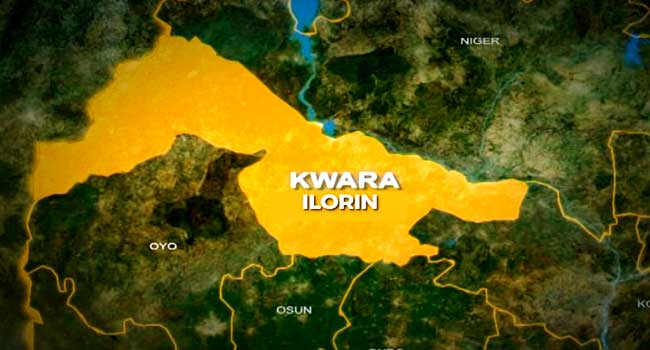
For the past ten years, Patigi and Edu local government areas of Kwara state have been disconnected from the national grid. With no option, residents are left to grapple with the ripple effect of the lack of electricity or switch to other costly and less effective alternatives.
As Musa spoke, frustration grew thicker in his expression, and children chased each other in the dimming light, unbothered by the darkness they had grown up in. For them, night arrives early every day. But for business owners like Musa, night never ends. Electric poles stand like lonely skeletons along the roadside, holding wires, but feeding no homes.
More residents echoed the same story
The agony and frustration that come with lack of Electricity in Patigi Local Government Area of Kwara State is not felt by Musa alone. Other residents from various villages also expressed their plight, with many describing the situation as “unfortunate”.
Speaking with The Informant247, Usman Muhmmed Abubakar, a resident of Kpata Gbaradogi community in Patigi, narrated how years of complete blackout have left him struggling to sustain his two businesses.
“I run two businesses, one of which I have a shop where I sell carbonated drinks and pour water,” he said. “I also operate another shop where I livestream football matches. It has not been easy to sustain the businesses due to the prolonged blackout. Since I started the business about four to five years ago, I have been using generators alongside solar power systems. It has been a very tedious experience as businesses continue to collapse on a daily basis”.
He added that the government has constantly promised to rectify the situation but nothing has been done. “The government has been promising to restore electricity in our community, but nothing has come of it. We don’t understand what effort they claim they are putting”.
Another resident from the Saci community, Muhammed Aliyu Nmaba, echoed the same concerns, saying commuters are forced to rely on solar and generators to generate light. “Starting with Patigi as a LG, it has been five years since we saw even a single ray of electricity. So, lack of light affects our households and daily life in various ways. Most of the activities of man depend on electricity, especially people who sell drinks. It has not been easy”.
“What they generally use to power their refrigerators is generators and solar. Buying fuel has not been easy. We buy sachet water at the rate of N50. Compared to the amount we buy beverages in the city, it has not been easy. Charging of phones is also a considerable factor. We rely majorly on small Solar to at least charge our phones and light the room. However, it is not as strong and even expensive. If there’s no sunlight, we will go blackout again,” he added.
“We heard sometimes back that the Government promised intervention and to change the direction where the light comes from, but nothing has been done up till now. I’m not aware of any government place that funds have been released for transformers in our area. From my side, I’ve not heard of any government funds that have been released for transformers in our area”.
“To be brief, in my own village (Sachi village), there’s no electricity there. We’ve never even sighted cables not to talk of transformers. We’ll appreciate any aid from the government. We have never experienced electricity in my village at all. We have lived in total blackout all our lives.”
Not only Patigi, Communities in Edu also bear the same brunt
Further findings shows that although Edu is connected to the national grid, residents of Lafiagi (the headquarters of Edu LGA) have suffered years of total blackout. Clinics and the general hospital can not operate at night due to the prolonged blackout.
According to a local resident who did not want his name on print, “it has been over 5 years since we last had electricity in Edu Local Government Area, specifically in Lafiagi, the headquarters of Edu LGA. Speaking about transformers, I would say we have not received any reports regarding them, especially in Lafiagi. There has been no installation or distribution of transformers at all.”
“The experience has been devastating. The persistent lack of electricity in Edu Local Government has caused numerous hardships. The burden we are carrying is overwhelming, and many businesses that rely on steady power supply are struggling to survive on generators,” he added.
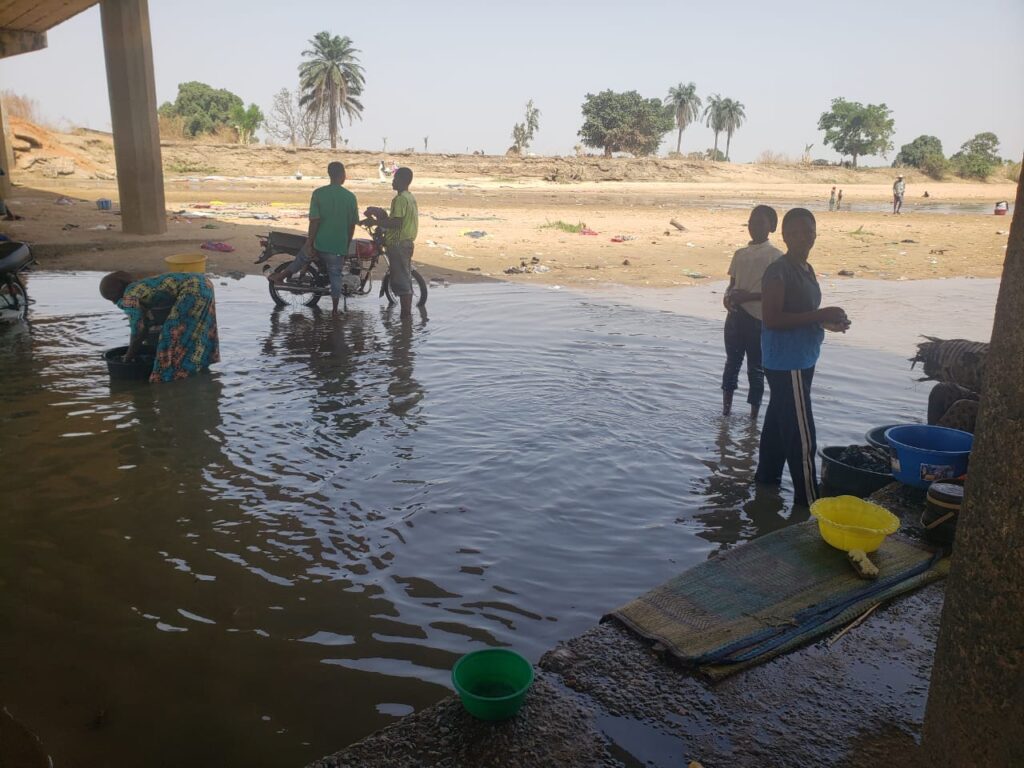
Across the communities, people are facing a series of serious problems due to the prolonged absence of electricity. Another local businessman, who spoke to our reporter on condition of anonymity, affirmed the claims by the first speaker, saying “we have not seen electricity in 5 years despite being connected to the national grid”.
This situation is despite multiple budget allocations for the two local government areas by the Kwara State Government. For the people of Patigi and Edu Local Government Areas, this darkness is not an event. It is their life.
In the absence of public power, local entrepreneurs have built their own survival systems. Tailors sit behind small battery-powered fans. Phone-charging kiosks run entirely on solar. Cold-room owners spend more on generator fuel than they earn.
IBEDC office not operational
The office of the Ibadan Electricity Distribution Company (IBEDC) in Patigi resembles a haunted shell rather than a functioning public utility. When this reporter arrived, the gate was locked. Although the facility maintains its architectural strength and physical value, the entire compound has been overtaken by bush.
The signboard was barely visible, almost swallowed by the thick vegetation creeping around it.
Inside the premises, there were no staff members, no vehicles, and no signs of activity. Not even a single footprint marked the dusty verandah, reinforcing the eerie silence that surrounded the facility.
Even a federal water facility, General hospitals couldn’t survive the blackout
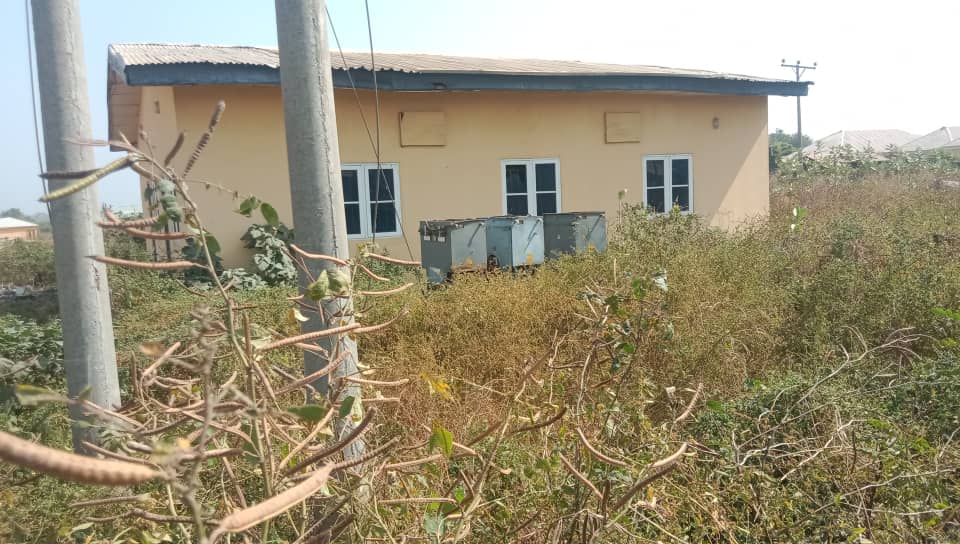
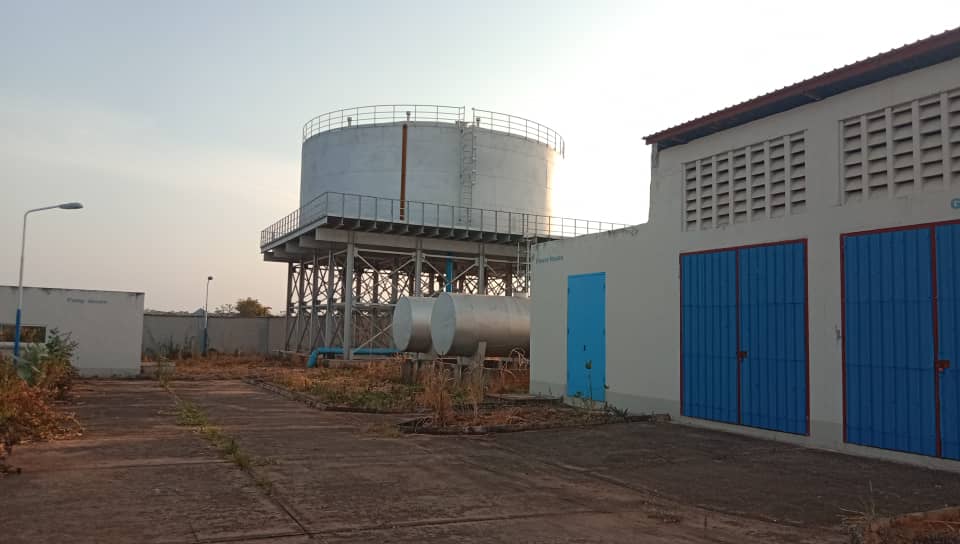
Just down the road lies the Patigi Water Supply Project, commissioned in 2022 under the Federal Ministry of Water Resources. Yet, much like the IBEDC office, the facility appears completely abandoned. Although there are workers and security on ground, the gate stood wide open when this reporter visited. The once-promising infrastructure is now fading under neglect.
There was no running water anywhere within the facility. The silence was telling, no hum of machines, no sign of activity.
Nothing captures the tragedy of the blackout more vividly than Patigi General Hospital. Approaching the facility at night, our reporter was greeted by deaf silence. Birds chirped from the hospital roof, as if the compound had become their territory. In the hallways, shadows layered the walls, and the air felt cold and abandoned.
Govt released millions of naira for non-existing transformers
In 2024, the Nigerian government released funds for the purchase and installation of transformers in Patigi and Edu local government areas of Kwara State.
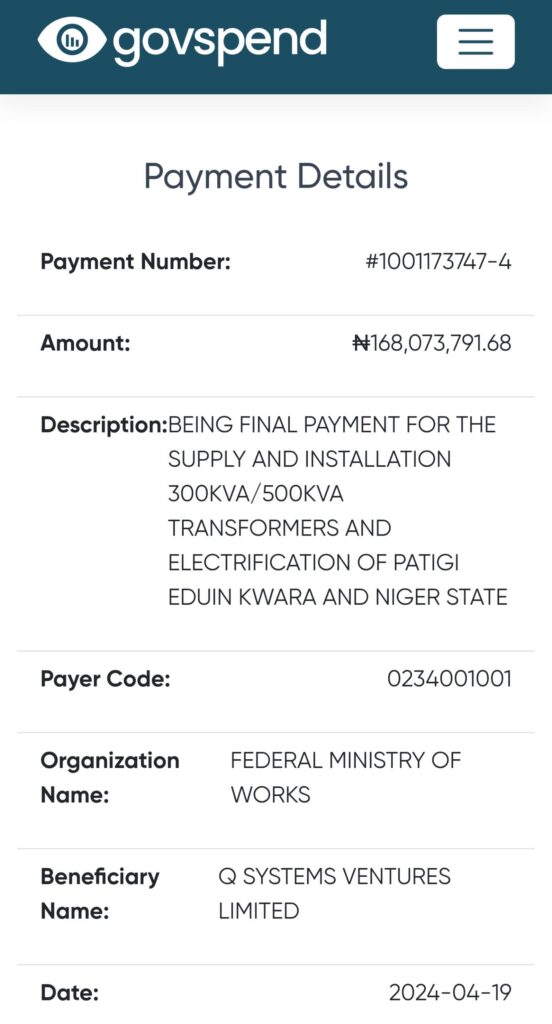
A review of the fund release on govspend showed that the contract was awarded to Q Systems Ventures Limited. A total sum of N168,073,791.68 was released as “being a ‘final payment’ for the supply and installation of 300kva/500kva transformers and electrification” in the communities in Kwara and Noger states.
“We never received any transformers for the communities” – IBEDC
Corroborating accounts from locals, officials of the Ibadan Electricity Distribution Company (IBEDC), told The Informant247 on condition of anonymity that it never received any letter or documentation referencing the supply of transformers to Patigi and Edu Local Government Areas of Kwara State.
“If the government wants to give out a transformer, it will not come through us. It will be delivered directly to the location where it’s needed, but they will do documentation with us.”
When further asked if the company has recorded any supply of transformers to the two local government areas in the last five years, one official said “if the government has delivered any transformers, they would have written a letter to us and provided us with the transformers document. That, I know, they did not give us any letters.”
Although the officials were reluctant to divulge any further information, they admitted to the fact that the affected areas are without electricity supply and the IBEDC office situated in Patigi is not operational.
“We can’t say exactly how long the blackout has persisted,” said the official.
Several efforts to contact the federal ministry of works proved abortive. Also, The Informant247 could not find the contact of Q Systems Ventures Limited, the company the transformer was awarded to.
THIS REPORT WAS PUBLISHED WITH SUPPORT FROM CIVIC MEDIA LAB