Column | Part 2: Between the barrel and the blindfold: Nigeria’s theatre of terror
By Abdulqadir M. Habeeb
The State That Outsourced Fear
What most unsettles observers is not the sophistication of violence but the state’s predictable response: Nigeria reacts rather than anticipates. Security becomes episodic theatre rather than sustained architecture. Troops deploy after headlines. Committees convene after funerals. Promises trail coffins.
The state behaves as though insecurity is an event instead of a condition.
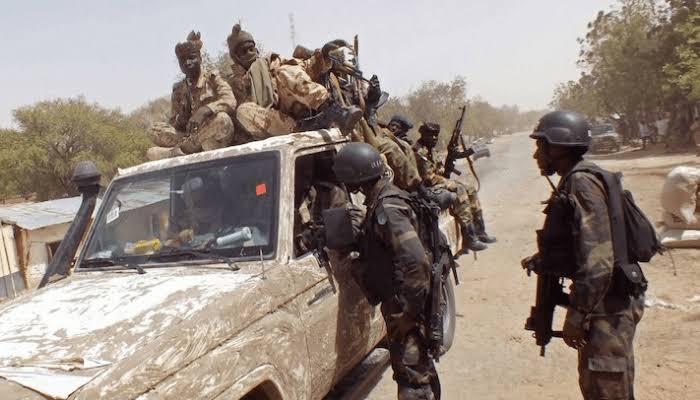
Military offensives announce success in reclaimed territories. Flags rise and press briefings follow. Yet civilians often describe returns that feel ceremonial. Markets reopen briefly. Schools hesitate. Nightfall revives anxiety. Insurgents melt into terrain and memory, then the cycle begins again.
Reuters and Al Jazeera reports consistently show how insurgent groups exploit these pauses. They retreat, rearm, recruit, and reappear with altered tactics. Victory claims lose meaning without permanence.
What Nigeria faces is not merely an armed enemy but an adaptive system that learns faster than bureaucracies evolve.
The Governance Vacuum as Recruitment Engine
Governance gaps function as recruitment engines. Where schools close, insurgents teach. Where courts vanish, they adjudicate. Where police extort, they arbitrate. ISWAP understood this early. Its courts punished theft swiftly. Its taxes funded welfare selectively. Its punishments appeared predictable. In fragile communities, predictability masquerades as justice.
CTC West Point analysis repeatedly shows how communities cooperate with insurgents not out of ideology but out of risk calculation. Survival demands accommodation when the state offers no competing bargain.
The Nigerian state has struggled to provide that alternative. Corruption corrodes legitimacy at the ground level. Soldiers complain of delayed salaries. Equipment shortages persist despite bloated budgets. Communities report intelligence leaks that precede attacks. When protection feels transactional, loyalty follows the highest bidder.
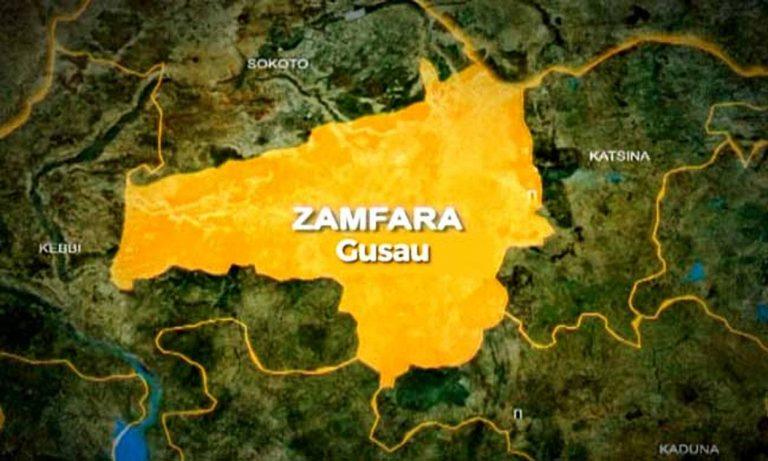
The northwest exposes another failure. Banditry thrives because conflict resolution collapsed. Grazing routes disappeared. Climate stress intensified competition. Traditional authorities lost enforcement power. Security agencies responded with brute force rather than mediation. Villages paid twice: once to bandits, again to the state.
SBM Intelligence documents how local peace deals often succeeded briefly until federal interventions disrupted them without providing alternatives. Violence returned sharper and more punitive. Policy incoherence breeds violence continuity.
The Economics of Kidnapping
Kidnapping endures because its economics remain untouched. Ransom payments flow largely unregulated. Financial trails dissolve. Negotiations occur privately. The state oscillates between denial and quiet facilitation. Families are left alone to solve existential threats.
Premium Times investigations reveal how ransom payments have quietly normalised, transforming abduction into a reliable revenue stream. Criminal markets stabilise around predictability. An economy cannot be moralised out of existence; it requires systematic dismantling.
Nigeria struggles with a deeper paradox: centralised authority confronts decentralised violence. Abuja plans while forests improvise. Policy crawls while networks sprint.
Technology magnifies this imbalance. Insurgents communicate across borders instantly. Encrypted channels coordinate attacks. Social media spreads intimidation. Meanwhile, government databases remain fragmented. Intelligence silos persist. Response times lag. Modern conflict rewards flexibility, and bureaucracy punishes it.
The Human Cost and Normalisation
Beyond operational failures, the human toll compounds these systemic weaknesses. Trauma accumulates quietly. Children raised under gunfire normalise fear. Displacement fractures social memory. Education gaps widen generational inequality. UN OCHA reports show millions displaced internally, living suspended lives without closure.
This is not collateral damage. It is the battlefield itself.
Normalisation raises the gravest concern. Nigerians adapt remarkably. Markets reopen. Jokes return. Weddings proceed. Life insists on continuing. But adaptation risks becoming acceptance. Fear becomes background noise. Violence blends into routine. When outrage fades, impunity expands unchecked.
Yet fatalism must be refused. History shows insurgencies collapse when legitimacy shifts decisively. Military force matters, but legitimacy determines duration.
What Must Change
Nigeria must confront insecurity as governance failure, not merely security deficiency. Infrastructure, education, and justice matter. Land policy, youth employment, and inclusion matter. National security emerges when citizens trust their government consistently across all regions.
Regional cooperation remains essential. Borders cannot remain administrative fantasies while violence travels freely. Intelligence sharing must exceed communiqués. Joint patrols must persist beyond summits. Sahel instability bleeds southward whether acknowledged or not. Reuters reporting confirms what locals already know: Nigeria’s fate intertwines with its neighbours.
At the community level, solutions must abandon spectacle.
Vigilantes require regulation, not romanticisation. Peace accords require enforcement, not photo opportunities. Victims require rehabilitation, not silence.
Most importantly, the state must listen without condescension. Communities understand their terrain, their fears, their compromises. Ignoring them cedes ground to those who do not.
A Citizen’s Perspective
This is written not merely as analysis but as lived experience. Every journey in Nigeria today carries calculation. Every silence carries meaning. Every siren alters pace. The distance between observer and participant has collapsed. We are all negotiating risk daily, making private arrangements for protection that should be guaranteed publicly.
Nigeria’s theatre of terror persists because fear found structure while governance stalled. Ending it requires more than force. It requires imagination disciplined by accountability. It requires the state to match the adaptability of its adversaries, not in violence, but in legitimacy-building, service delivery, and the patient reconstruction of trust.
Violence adapts relentlessly. The state must evolve faster. The alternative is a future where private security arrangements replace public guarantees entirely, where communities negotiate separately with armed groups, and where Nigeria exists only as an idea rather than a functioning reality.
The choice remains: rebuild the social contract, or watch it fracture beyond repair.
‘Posterity shall vindicate the just’
Habeeb is a Tech, Strategy, and Innovations consultant based in Abuja. He keeps a periodic column here and can be reached via habeebajebor@gmail.com.
Sources Note: This column draws on reporting and analysis from HumAngle, the Combating Terrorism Center at West Point, UN OCHA, SBM Intelligence, Premium Times, Reuters, and Al Jazeera, alongside field observations and publicly available security assessments.
Cited Reports and Sources
HumAngle
Nigeria – HumAngle: https://humanglemedia.com/nigeria/
Over 1,420 Nigerians died from events of insecurity in Q1 (Policy Brief): https://humangle.org/over-1420-nigerians-died-from-events-of-insecurity-in-q1-what-can-we-do-about-it/
A Silent Mental Health Emergency in Nigeria’s Conflict-Affected Regions (Policy Brief): https://humangle.org/a-silent-mental-health-emergency-in-nigerias-conflict-affected-regions/
Combating Terrorism Center at West Point (CTC)
CTC at West Point (Main site): https://ctc.westpoint.edu/
ISWAP’s Tactical Evolution Fuels Worsening Conflict in Nigeria’s Northeast (Soufan Center): https://thesoufancenter.org/intelbrief-2025-may-21/
Unseen advances, quiet offensives: ISWAP’s strategic resurgence (Good Governance Africa): https://gga.org/unseen-advances-quiet-offensives-iswaps-strategic-resurgence-and-the-limits-of-nigerias-military-response/
UN OCHA
Nigeria 2025 Humanitarian Needs and Response Plan (January 2025): https://www.unocha.org/publications/report/nigeria/nigeria-2025-humanitarian-needs-and-response-plan-january-2025
Nigeria – UN-OCHA country page: https://www.unocha.org/nigeria
SBM Intelligence
FOLLOW THE MONEY: The Economics of Nigeria’s Kidnap Industry (2023 Update): https://www.sbmintel.com/wp-content/uploads/2023/08/202308_Kidnap-report.pdf
Report: Nigerians paid N2.57bn ransom to kidnappers in one year | 4,722 abductions recorded (The Cable): https://www.thecable.ng/report-nigerians-paid-n2-57bn-ransom-to-kidnappers-in-one-year-4722-abductions-recorded/
Premium Times
Kidnapping victims Archives | Premium Times Nigeria: https://www.premiumtimesng.com/tag/kidnapping-victims
Reuters
Bombing of herders highlights deadly air attacks by Nigerian military: https://www.reuters.com/investigates/special-report/nigeria-military-civilian-airstrikes/
Vigilantes fill security gaps as bandits target rural Nigeria: https://www.reutersconnect.com/item/vigilantes-fill-security-gaps-as-bandits-target-rural-nigeria/dGFnOnJldXRlcnMuY29tLDIwMjU6bmV3c21sX1JDMkI2SUFVR1VJTA
Al Jazeera
Cooperation not threats: Nigeria wants US alliance to curb violent attacks: https://www.aljazeera.com/features/2025/11/19/cooperation-not-threats-nigeria-wants-us-alliance-to-curb-violent-attacks
Nigeria’s defence chief on human rights abuse reports and security (YouTube): https://www.youtube.com/watch?v=b826cT1ROa8